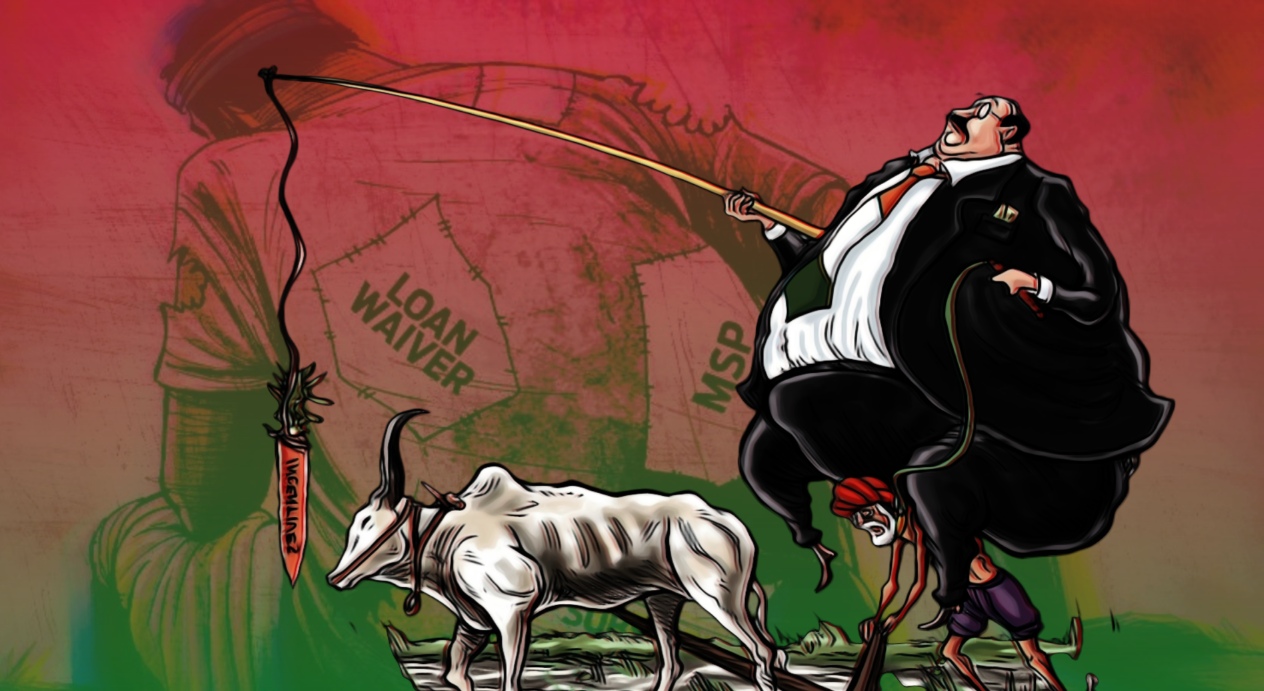
On 25 October 2025, national launch of a scheme called ‘PRIME MINISTER DHAN DHAANYA KRISHI YOJANA (PMDDKY)’ has been inaugurated by PM Modi who exhorted the farmers to shift their focus from producing rice and wheat to the production of crops which can be exported. Its inauguration at Kerala state-level was done by the state Agriculture minister at a function organized by the Vegetable & Fruit Promotion Council Kerala (VFPCK) at its Seed Production Center at Alathur in Palakkad District. In that function, the Minister stated that the Centre would be requested to include Palakkad and Alappuzha districts, which are the largest rice producing districts in the state, in the first list of 100 districts where the project would be launched for the first time. The minister also expressed desire that all the districts of Kerala with high agricultural activities be included under the scheme. (Malayala Manorama 12/10/25).
What New is this ‘PMDDKY’?
Let us delve into the details for a clear understanding of this much trumpeted scheme.
As per ‘The Operational Guidelines (2025)’ released by the Department of Agriculture & Farmers Welfare, Ministry of Agriculture & Farmers Welfare, Government of India, the scheme is for raising the agricultural productivity of under performing agricultural regions in the country. It is an initiative to address the root causes of low productivity, inadequate infrastructure, and poor credit access, and hence it aims to create a sustainable and productive agricultural ecosystem in 100 districts through the convergence of existing schemes and specialized measures adopted by the key ministries, within a specified timeline. It claims that this plan will revitalize agriculture in rural India, improve farmers’ incomes, and ensure long-term sustainability and food security. It also claims that the farmers’ income will be ‘doubled’. This claim echoes the promise made by the BJP during the election campaign of 2014 and then assured by PM Modi subsequently. But, as all know, the assurance has not materialized.
The document states about the announcement made in the Union Budget of 2025 – 26 and the approval given by the Union Cabinet on 16 July 2025. Further it is stated that ‘PMDDKY’ is a scheme with an annual budget of Rs 24,000 crore for six years (from 2025-26 to 2030-31). In other words, Rs 1.44 lakh crore have been earmarked to support 1.7 crore farmers, particularly small and marginal farmers owning less than 2 hectares of land, who constitute 86% of India’s farming population (Economic Survey 2024-25), over five years. And again, it states that motivated by the success of the ‘Aspirational Districts Programme’, the government will undertake a ‘Prime Minister Dhan-Dhaanya Krishi Yojana’ in partnership with the states, through convergence of the existing schemes and the fresh specialized measures. The number of districts in each state will be decided based on the share of Net Cropped Area and number of operational holdings. However, at least one district will be compulsorily selected from each state.
Objective of PMDDKY
Further, PMDDKY aims to (1) enhance agricultural productivity, (2) adopt crop diversification and sustainable agriculture practices, (3) augment post-harvest storage at the panchayat and block level, (4) improve irrigation facilities, and (5) facilitate availability of long term and short term credit. To ensure the success of this ambitious programme, the government will leverage existing schemes across various Ministries/Departments.
Since all are existing schemes and the farming community is very much familiar with those, it is not necessary to dwell here with all the details of the existing schemes listed in annexure-2. However, for a general understanding, we cite here only some of such schemes of the Department of Agriculture and Farmers’ Welfare. Pradhan Mantri Kisan Samman Nidhi (PM-KISAN), Pradhan Mantri Fasal Bima Yojana (PMFBY), Restructured Weather Based Crop Insurance Scheme (RWBCIS), Modified Interest Subvention Scheme (MISS) through Kisan Credit Agriculture Cards (KCCs), Infrastructure (AIF), Integrated Fund Scheme for Agriculture Marketing (ISAM), Formation and Promotion of 10,000 new Farmer Producers Organizations (FPOs) etc., are some of such the examples. As far as the peasants are concerned, these schemes have not been able to even ameliorate their miseries.
According to clause 5(3) of the Operational Guidelines (2025) a baseline survey will be conducted for ascertain the existing status which, inter alia, will include:
- Agriculture productivity of main crops, fruits and vegetables having substantial coverage along with identification of those blocks / villages where the productivity is less than the district average.
- A diagnostic analysis of reasons where productivity is low so that short, medium and long term measures can be identified and interventions linked to the ongoing schemes.
- Identification of post-harvest infrastructure gaps including warehouses, ripening chambers, market yards, etc.
- Identification of cold chain gaps including cold storage, refrigerated vans, etc.
- The average productivity of fisheries and milk and the reasons for any shortfall.
- A general soil health map of the district identifying key nutritional deficiencies.
- Specific region wise gaps in availability of horticulture seed / plant materials as well as availability of latest climate resilient seed authority in major crops being grown in the district.
- The credit deposit ratio and the level of priority sector lending in the district and the reasons for shortfall in the achievement of the targets of the district credit plan.
- Identification of regions sensitive for natural disaster, pests and diseases of crops and diseases of livestock etc.
Based on the above Baseline Survey and diagnostic analysis, the district will prepare a comprehensive and sustainable agriculture and allied sector development plan, conforming to agro-climatic area and resources, which will cover the following:
- Five-year outcome based targets linked to cropping intensity, productivity, post-harvest infrastructure, diversification to horticulture/ fisheries/ animal husbandry and credit flow.
- Physical target of various schemes that would be necessary to achieve the five year outcome. These targets can be broken down to yearly targets of five years in physical and financial terms.
- The action plan will also include specific responsibility of district level officers/ identification of agency responsible for achievement of these targets. Such are the things envisaged in ‘PMDDKY’.
Now let us discuss in brief the condition of the peasant community in the country which constitutes about 64% of the rural population. After the policies of capitalist Globalization Privatization-Liberalization were announced, the focus of the governments, both at the Centre and in the states, had changed radically. Instead of domination of government sector in agriculture, thrust was on entry of the giant multinationals so that they could make huge profits by controlling the markets of both inputs and procurement. After the PM Modi led BJP government assumed power at the Centre with a brute majority, the ruthless capitalist onslaught on the toiling masses including the peasants increased manifold. Consequently, the agricultural sector has also been afflicted with acute and insurmountable crisis. The vast majority of the rural population comprising peasants, agricultural and allied workers, tribals etc. are facing acute distress for the last three decades and a half. Debt trap and suicidal deaths are mounting. Spurt in cost of agricultural inputs and non remunerative prices of the agricultural produce is are causing this crisis in the life of the peasants. So, addressing the issue of mitigating the hardship of the pauperized peasants has assumed paramount importance. Unless the cost of inputs like seeds, fertilizers, pesticides, diesel etc. are brought down within the affordable limit of the peasants and guaranteed procurement of the crops by the government controlled machinery at least at Minimum Support Price (MSP) based on the formula C2 + 50% for all agricultural produce is ensured, the condition of the peasants cannot be improved.
In this connection let us recall the 13 month long Historic Delhi peasant movement, in course of which more than 750 demonstrating peasants had embraced martyrdom. Under pressure of movement, the PM, besides withdrawing the three Black Farmers’ Laws, gave a written assurance to introduce a guaranteed MSP regime. Only after that, the glorious movement was called off. Instead of honouring the commitment, the government has now been trying to bring back the three draconian laws to favour entry of multinationals in agricultural sector through backdoor under the name of ‘New National Policy Frame work on Agricultural marketing’ through the Ministry of Agriculture and Farmers welfare. It is revealed that this new policy is also aimed at handing over the Agricultural marketing to the hands of the agro giants by dismantling the APMC Mandis and thousands of agriculture markets including the village markets (huts) spread across the country. Again, the provisions for promoting the contract faming also has been included in the new framework. It turned out to be a comprehensive plan for privatization of all agricultural produces like rice, wheat, pulses, vegetables, oilseeds, milk, meat etc. Due to stiff opposition from the peasantry and also because of the recent developments in the international situation, the government is forced to defer finalization of the same for notification and implementation. The development in the international situation particularly the tariff war perpetrated by the American President Donald Trump and the subsequent ‘Comprehensive Economic and Trade Agreements’ (CETAs)’ signed between India and Britain and other EU countries on the one hand, and the Enhanced Economic and Military Cooperation with the Zionist Israel on the other hand, are going to adversely affect Indian economy including production and distribution of agricultural produce. Hampered production of pulses, vegetables, oilseeds, milk, meat etc. are also going to impact the businesses of the retail outlets controlled by the Indian monopoly houses who compete with giant Multinational Corporations in the field.
From the foregoing discussion, anybody can understand that with the merger of the existing schemes and specialized measures from the key ministries under ‘PMDDKY’ is not going to reduce the predicament of the peasantry. It is a renewed attempt of the PM Modi-led BJP government to hoodwink the people in general and the peasantry in particular so as to diffuse rising temper against the government for denial of remunerative price of agricultural produce. The BJP government commitment must of honour the Guaranteed procurement of crops with MSP @ C2+50%. Anything other than this would be nothing but treachery. In such a situation, the suffering peasants and the supporters of their just demand are called upon to come forward and build up a powerful movement for implementation of guaranteed MSP @ C2+50% and thwart the proposed Agricultural marketing through ‘PMDDKY’, and ‘CETA’s.