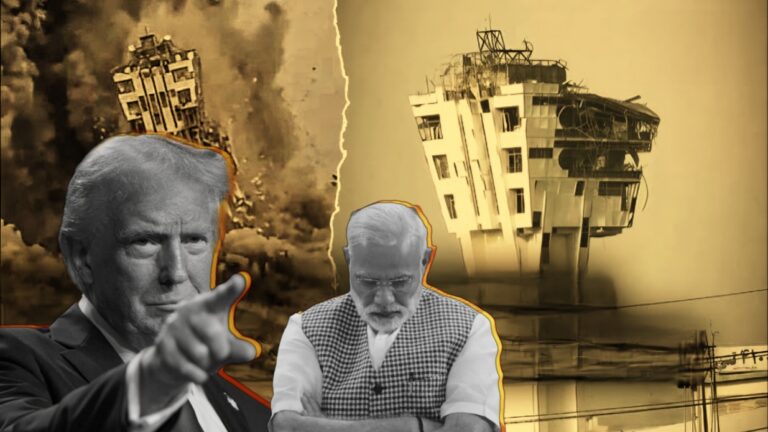
Unprovoked war launched by US imperialism-Zionist Israel duo on Iran has caused the biggest oil disruption in history, according to the International Energy Agency (IEA). The crisis in fuel and energy that the world is battling to contain shows that much of the globe continues to run— and, on occasions such as this, slip— on oil. Oil’s continuing geostrategic magnetism makes it a double-edged sword. Its prized status prompts US, chieftain of global imperialism-capitalism, to fuel periodic flare-ups round the world. The US’s criminal commando operation in Venezuela was underpinned by President Trump’s rapacity for high grade Venezuelan oil. Also, the military muscle-flexing by US to occupy Iraq, assassinate Libyan President to orchestrate a regime change there, illegal intervention in Sudan and engineering a sustained civil war there, are all aimed at capturing the vast oil resources of those countries. And now, US with its agent Israel, have been on a mission to acquire the oilfield of Iran which, as of early 2026, was exporting approximately 1.5 to 1.6 million barrels per day (bpd) of crude oil, with total oil exports (including refined products) sometimes exceeding 2 million bpd. President Trump did not mince matter to announce that his government needs Iranian oil. US is self-sufficient in oil resources. Then why this attack on Iran soon after its covert operation in Venezuela? The answer is simple. US multi-nationals want to establish their total control over global oil trade— from extraction to distribution.
Missile Attack on Oil Infrastructure
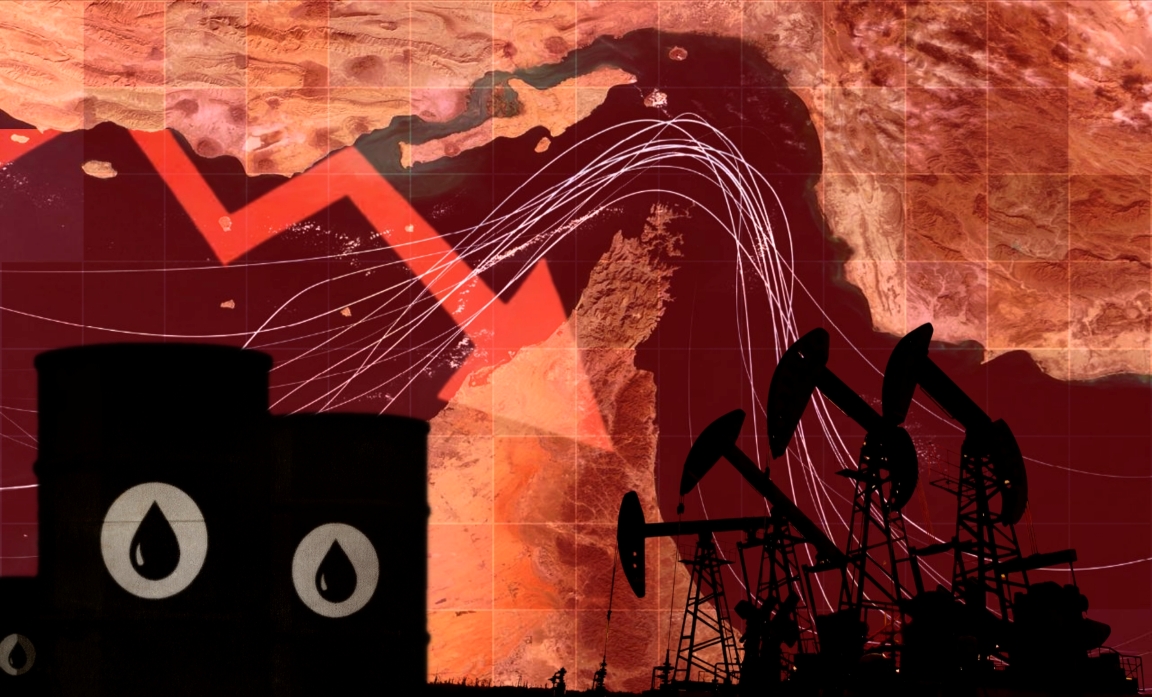
With that objective, the US Israeli military have been targeting some key oil and gas installations of Iran and holding out threat of their all-out destruction. In retaliation, besieged Iran is also undertaking missile attacks on oil infrastructures of the Middle East countries which the US has been harnessing to fuel its war machinery. The war shifted significant gears when Israel struck Iran’s South Pars gas field. Following that, Iran attacked Qatar’s Ras Laffan plant – the world’s largest liquified natural gas plant from where one fifth of the global natural gas is exported. The US then bombed Iran controlled Kharg Island from which Iran exports around 90–95% of its daily oil. Nearly 80–90 % of Iran’s oil reserves are associated with Kharg Island, which also holds vast deposits of gold and other mineral resources.
Closure of Strait of Hormuz
Visibly aggrieved, Iran is compelled to block the transit through the narrow Strait of Hormuz, which is the passage of about 25% of global maritime oil trade and roughly 20% of global daily oil consumption. It had earlier allowed only a handful of ships to go through and halting the transport of more than 20 million barrels of oil per day – roughly one fifth of global petroleum consumption. The Strait of Hormuz is a bottleneck for more than just fuel. It carries: 40% of the global fertilizer trade (essential for industrial agriculture), 85% of West Asian polyethylene, 25% of global helium supplies (critical for high-tech and semiconductor production) and 30% of oil and gas supplies to the million people (Source: U.S. Energy Information Administration (EIA). 2026. World Oil Transit Chokepoints Report. Washington, D.C.: EIA). Thus, the centre-stage of conflict has moved from the oil field to the maritime chokepoint. In fact, Iran’s act of closing the Strait of Hormuz and consequently causing a sharp upswing in world oil prices, is also presumably meant precisely to arouse opposition to the war among the countries of the Global South and persuade them to recognize that the war against Iran is also a war against them. Iran cautioned that they would face great hardships if shipping through Hormuz is hindered and hence cannot just remain indifferent to it. To some relief, Iranian authorities had developed a system for managing shipping in the Strait of Hormuz. They had, depending on the level of their relations with Iran, categorized the countries into three — ‘hostile,” “neutral,” and “friendly.” Countries in the first group would be prohibited from using the Strait of Hormuz, ships from “neutral” states would be subject to payment of tolls, and “friendly” states will be granted the right of free passage through the strait. Incidentally, US has been claiming that Strait of Hormuz is an international waterway. But that is not the truth. It is a maritime owned by Iran and Oman. The Omani side of the Strait of Hormuz is navigable and forms part of the established international shipping lanes, but it is not commonly used for large commercial traffic because the deeper, designated traffic separation scheme (TSS) runs primarily through the middle and closer to the Iranian side. Unable to overcome Iran’s control over the Strait, the US has parked its naval fleet to block five Iranian ports— a clear aggression through water route. Now, with Iran once again, stopping passage through Hormuz following creation of blockade of Iranian ports by US, oil crisis has aggravated much more.
Devastating Impact of Oil Shortage
With oil being an intermediary in the production of a range of commodities and driving the cost of transportation, oil price increases are pushing up prices of almost all commodities. The war has also impacted shipping, disrupting supply chains, undermining production, and raising costs. Increases in oil costs translate directly into higher prices for transport, food, and essential goods, disproportionately affecting working populations. Inflation, by eroding real incomes of households, reduces discretionary spending of households, affecting first the retail sector and then those supplying the goods in the consumption basket. So, the market of the capitalists’ imperialists shrinks causing stagnation. A rise in fertilizer prices because of the oil price spiral will raise the cost of production of foodgrains, and hence foodgrain prices (assuming that the profit-margin of foodgrain market manipulators would not shrink). And all this is quite apart from the rise in transport costs of all commodities which will give a comprehensive additional push to inflation. The prospect of sustained price escalation coupled with stagnation raises the likelihood of a stagflationary environment, where inflation coexists with economic stagnation. Shrinking fuel stocks and soaring prices are already leading countries around the world to burn coal, ration fuel distribution and shorten work weeks. Many eateries are either downing shutters or selling limited items at higher price. Hence, the war’s impact on inflation is far greater than the immediate increase in petroleum and oil product prices.
Reference to Oil Crisis of 1973
Rebutting the attempts from some quarters to compare the present crisis with that of 1973-74, some analysts argued that this historical parallel obscures important structural differences. On 6 October 1973, Egypt and Syria launched an attack on Israel to reclaim territory Arab nations had lost six years earlier. King Faisal of Saudi Arabia warned the then US President Richard Nixon that supporting Israel would jeopardize oil supplies. Despite that, Nixon authorized a large military airlift. So, on 17 October 1973, Arab oil-exporting nations belonging to the Organization of Arab Petroleum Exporting Countries (OAPEC) retaliated by raising the price of oil by 70 percent, cutting production by 5 percent per month and banning oil shipments to the US. The Netherlands, Portugal and South Africa were also targeted for their roles in providing diplomatic and military support to Israel. At the time, the Middle East accounted for 36 percent of world oil production, and the embargo left the world short of 4.5 million barrels of oil per day. The oil embargo was lifted in March 1974, but its consequent economic shock took the better part of a decade to be somehow absorbed. The recession that followed the 1973 oil shock was among the deepest of the post-World War II era, affecting those countries most dependent on oil, namely in the Western Hemisphere. No, not just other countries, even US itself felt the pinch. US inflation hit 12.3 percent in 1974, up from 3.4 percent in 1972. Unemployment in US climbed from 4.6 percent in October 1973 to 9 percent by May 1975 while GDP contracted by 0.5 percent the following year. Rightly contended by some analysts, in 1973, the shock was delivered by a unified, multinational bloc targeting specific Western countries. The current disruption stems from a single actor controlling a single transit point with no coordinated production cut among Gulf producers and some countries are more vulnerable than others. In 1973, the shock was concentrated on Western economies, which were the primary targets. In 2026, the most vulnerable economies are the developing Asian markets that have grown fastest over the past 30 years and about 80 percent of whose oil imports pass through the Strait of Hormuz. It was reported that in the last week of March, Vietnam held fewer than 20 days of oil reserves while Pakistan and Indonesia held about 20 days each. Oil and gas prices have been erratic in the US: gas prices have begun to bite Europe.
Grabbing Oil Fields is not the only Motto of US Imperialists
We also need to take into account another pertinent fact. As indicated above, US does not depend on East Asian oil. Yet it is out to grab the oil fields there at gunpoint. Why so? Because it is not merely a conflict over nuclear proliferation or regional dominance. It is, at its core, a war with deep economic underpinnings— rooted in Pentagon regime’s determination to protect the petrodollar system that has sustained American financial supremacy for half a century. Petrodollars are oil export revenues denominated in US dollars. Though Petrodollars are not a distinct currency and simply denote the US dollars accepted as payment by an oil exporter, its significance lies elsewhere. Global acceptance of US dollar as a strong currency made its acceptance for settling oil sales and facilitating oil exporters to invest the sale proceeds, as US dollar has been a preeminent global investment currency. The petrodollar system originated from a 1974 agreement between the US and the Gulf states which established dollar-based oil sales, and US Treasury reinvestment for security provisions Washington. Since then, from the reshaped trade balances for oil-rich nations, highlighting the dollar’s dominance in global trade. This mechanism has been providing the US with low-cost funding for its deficits which has gone over $ 1.84 trillion. Apart from this, it helps US government in payment of interest on the rising national debt which is reported to be an astronomical high $38 trillion. The annual cost to service the US national debt (meaning payment of approximately $520 interest) is billion, representing about 17% of total federal spending. But, in the changing global scenario marked by emergence of both Russia and China as strong imperialist powers after counter revolution, many countries particularly the BRICS member nations (Brazil, Russia, India, China, South Africa) are actively using local currencies in their mutual trades, including oil and energy, to reduce dependence on the US dollar. This initiative involves using the yuan, Ruble, rupee, and dirham for settlements, significantly impacting global trade, particularly via China. The shift aims to bypass the petrodollar system and mitigate the impact of Western sanctions, with Russian officials claiming that about 90% of trade with partners was settled in national currencies by late 2024.China and Russia have shifted most bilateral trade to yuan and Rubles. India is pushing for broader local currency acceptance, including rupee-based oil payments. This development is evidently detrimental to the interest of US imperialism. Leaders who have attempted to move oil trade away from the dollar have faced severe consequences. Saddam Hussein switched Iraq’s oil sales to euros in 2000; the US invaded the country in 2003. Muammar Gaddafi proposed a gold-backed African currency for oil transactions; NATO intervened in Libya in 2011. Venezuela’s Nicolás Maduro pursued non-dollar oil trade with China and Russia; Washington imposed crippling sanctions, backed an opposition movement there, and later abducted President Maduro. Iran, in the middle of an active war, has gone further than any of them. Iran has been trading oil with China in Chinese yuan (RMB) to bypass US sanctions and reduce reliance on the US dollar. As of early 2026, China is buying over 80% of Iran’s seaborne oil exports, often paying through informal, non-dollar, and Yuan denominated banking channels. This shift is part of a broader “petroyuan” strategy.
US Strategy might Backfire as well
Hence is the attempt on the part of US imperialists to overrun Iran. Let it not be misconstrued that it is a conventional energy shock occasionally triggered by certain developments like oil production reduced by OPEC countries to stem falling price etc.. The dollar’s exchange rate will rise as LNG and crude oil prices rise, without intervention by the US Treasury or the Federal Reserve. The strengthening dollar will impose greater strain on the economies of countries that must import oil and gas. The result will be an uneven, fragmented crisis in which destruction could arrive faster and more forcefully than expected, spilling beyond energy into the broader global economy. Unlike past disruptions, there is little sign of coordinated leadership to manage the fallout. If these dynamics persist, the current crisis risks tipping from a supply shock into a deeper, dollar driven economic downturn with global recessionary consequences. Already the conflict has created a strategic setback for US in the Gulf region. Iran has gained complete control over the Strait of Hormuz which enables Iran to decide which ships will navigate through the waterway. The US established its global supremacy through its long-standing practice of controlling vital maritime routes. US failure to ensure security in the Gulf could unwind the premise on which the petrodollar is built. The current conflict has the potential to undermine the US security protection over Gulf infrastructure and maritime operations that safeguard international oil transportation. In that event, Gulf states might reduce their dollar denominated foreign asset investments because economic losses from the Gulf will impact their merchandise value. This is another possible outcome of the US’ war initiative.
Indian Situation
India may be geographically distant from the embers emanating from the conflict taking place in West Asia. But that does not mean that it is immune to the conflict’s wide-ranging impacts. India imports almost 90% of its crude oil needs. About half of this reaches India through the Strait of Hormuz, currently in the eye of a storm triggered by the US-Israel attack on Iran. Half of India’s LNG imports come from Qatar alone. Most of this is used by the fertilizer industry, followed by city distribution of pipeline gas for cooking and compressed natural gas. The first to hit Indian homes amidst this crisis was the liquified petroleum gas shortage, which had citizens queuing up for cylinders. From kitchens to wallets, the deepening energy crisis in fuel and gas is leaving an imprint on India’s shores. Around 60% hotels and restaurants have been closed in India due to shortages of gas supply while countless households have reverted to firewood, kerosene, cow dung cakes, crop residue and coal as fuel to meet cooking demands. This reversion to ancestral method of cooking would create further harm to climate. The BJP-led Indian government claims that it has invoked emergency measures so as to ensure unimpeded supply of these critical resources across sectors. But the reality invalidates the claim. It also added that India remains in a “very comfortable position” regarding crude oil, petroleum products and LPG availability. If that be the case, how is it that cylinders are available in the market at twice the stipulated price? That means some unscrupulous quarters presumably in connivance with the oil companies are seizing the opportunity to make fortunes by hoarding stocks and releasing them at highly inflated price with the government machinery remaining a passive onlooker.
Steep Hike in LPG Price and Rampant Black Marketing of Gas Cylinders
Moreover, within a week of the war, the government hiked domestic LPG cylinder prices by Rs 60 and commercial cylinders by Rs 115. This has been the second increase after the last one of Rs 50 in April 2025 when West Asian export was not halted because of war. But when the crude price came down to $55-60 a barrel and Russia were supplying 35-40% of the requirement at $35 per barrel, the benefits were not passed on to the citizens by lowering petrol-diesel-LPG prices. Rather the government usurped the benefit by imposing higher taxes. Just the other day, the government slashed the Special Additional Excise Duty (SAED) by Rs10 per litre for both petrol and diesel. No, it is not for the sake of common people but as a relief for state-run Oil Marketing Companies (OMCs) like IOC, BPCL, and HPCL. The government says these companies are making loss which is again a white lie. Net profit of Indian Oil in 2024-25 was Rs12,962 crores. That of BPCL and HPCL were Rs 13,275.26 crores and Rs 7365 crores respectively. Where is the loss? In fact, as we have been saying for long, what is called “loss” for the oil companies is actually under-recovery, a notional term, which represents the difference between the high cost of importing/ producing fuel and the lower, regulated selling price set by the government. In other words, by selling oil in Indian market instead of exporting at higher cost, they are notionally earning less. The government is so concerned about the PSU giants or even private oil companies like the Reliance. But when it comes to the question of common toiling masses, hardship is meted out with alacrity. In the present scenario it would be most surprising if the Indian government says it was not aware of such an eventuality. Already it has tamely capitulated to US fiats of reducing oil import from Russia and sourcing more from US at higher price. It was also aware that US and Iran were locked in a conciliatory summit mediated by Oman, and the US officials were expressing dissatisfaction with, and skepticism toward the talks viewing them as inefficient and insufficient to address key concerns. So, there was enough indication of an ensuing military scuffle paralyzing global oil trade to a great extent. Why did the government not take remedial measures in anticipation? Or is it a party to the US scheme of rescuing the fragile economy by embargoing oil supply, consequent spike in oil and gas prices and stability of US dollar?
Why the Global People are in such a Predicament?
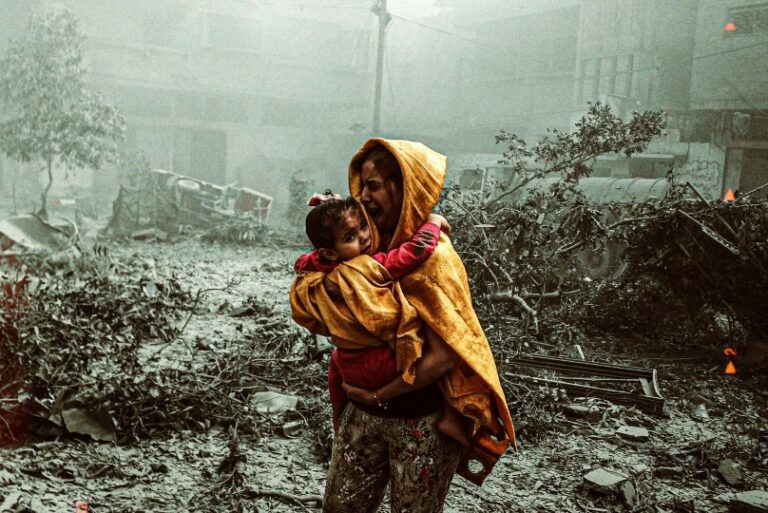
Why eight decades after the cataclysm of the Second World War—a systemic upheaval that claimed tens of millions of lives— does the contemporary world once again stand on the edge of a fresh imperialism generated war? Because, the global imperialist-capitalist system is desperately trying to come out of the growing economic crisis, fallout of the system itself, by resorting to war, increased militarization of economy and now using heft of oil as a tool. Behind this shell lies the true engine of destruction: monopoly capital and the military-industrial complex. The dictatorship of the dollar, backed by oil, demands perpetual war to sustain its terminal accumulation. And the brunt will be borne by the oppressed millions as the imperialist-capitalists would offset rising energy costs by squeezing labour—lowering real wages and intensifying exploitation. Not only the populations of Iran, Palestine, Lebanon, Yemen, and Syria continue to endure immense human suffering as warfare reorganizes entire societies through destruction, displacement, and dispossession, the price is being paid by all other countries, with variance in degree. This is not merely a regional crisis; it signals total bankruptcy of the obsolete global capitalist system. Had there been a resurgence of global communist movement in right direction and under correct revolutionary leadership, world revolution could surge forth seizing maturity of the objective condition of revolution. As Rosa Luxemburg, a well-known Marxist leader had argued, the capitalist machine’s thirst for external resources makes it inherently violent; when those resources are constricted, the system turns its teeth inward on the working class. The current military onslaught of US-Israel on Iran bears eloquent testimony to that.