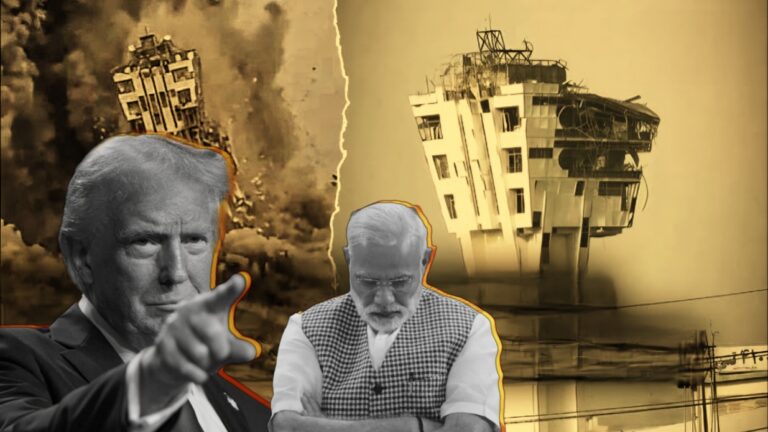
War has always been the most violent expression of political conflict, but in the contemporary era of imperialism and proletarian revolution, it has also become a systematic instrument of market grabbing, economic domination, extension of sphere of influence and geopolitical restructuring. Because of such armed power struggle among the imperialist powers or imperialist wars of aggression on targeted countries, humanity is incurring a huge loss, both in terms of death, destruction of property, health disorders, mental diseases and so forth. Over the years, mankind has created the modern civilization with labour. Besides affecting people’s lives, wars inhibit income growth of countries, reduces mortality, changes sex ratios, prolongs periods of hunger, migration, dispossession, and persecution. War wounds often extended beyond the merely physical. Some of the most enduring images of the Great War are of men suffering from ‘shell shock’ – or, as the medical experts preferred to call it, war neurosis. Shellshock is a form of nervous breakdown that severely affected one’s ability to move and function. In the worst cases of shell shock, men were turned into shaking, twitching, convulsing wrecks, unable to carry out basic movements like walking a straight line.
Beyond the visible destruction lies a deeper, more insidious impact: the erosion of human capital. Wars disrupt education, destroy healthcare systems, and create long-term psychological trauma. Children lose access to schooling, leading to generational deficits in skills and productivity. Healthcare systems collapse, resulting in preventable deaths from disease and malnutrition. Mental health crises are widespread. Anxiety, depression, and post-traumatic stress disorder affect both civilians and combatants. Veterans often face high suicide rates, while displaced populations struggle to rebuild their lives in unfamiliar environments.
All wars are not same
It warrants mentioning that not all wars are identical in character. Historically, wars have taken two broad forms. On the one hand are wars of aggression, initiated by ruling classes to expand markets, secure resources, and consolidate geopolitical influence. On the other are wars of resistance, in which oppressed peoples mobilize against domination and exploitation. While both forms of war produce destruction, their political content differs fundamentally.
Modern warfare generated by imperialism is annihilation encrypted
After two World Wars that retrograded progress of civilization by 100 years, now the imperialist brigands are out to destroy that civilization once again just for satiating their greed of maximum profit and gratifying overlordism. Armed conflicts by people to free themselves from the stranglehold of exploitation of man by man or a foreign aggression is a just war. It also causes death and devastation. But for the colossal destruction of life and property, it is the imperialists-capitalists who are squarely responsible as they only launch wars on others to buttress their hegemonic aspiration and nurturing militarized economy to somehow hold on to their decadent moribund existence. Modern war is not only confined to armed battles. It disrupts entire ecosystems of human life, from energy markets to food supply chains. The resulting inflation disproportionately affects the poorest populations, who spend a significant portion of their income on basic necessities. At its core, every war entails colossal devastation. Human lives—often those of civilians with no role in decision making—are extinguished. Infrastructure painstakingly built over decades is reduced to rubble. Economies collapse, and societies are plunged into long-term instability. As documented in recent assessments, the humanitarian cost of war is borne disproportionately by ordinary people: women, children, workers, and the poor, who neither initiate nor benefit from armed conflict. The numbers of casualties also represent families torn apart, communities erased, and futures extinguished. Civilian infrastructure—homes, hospitals, transport systems—has suffered extensive damage. A glance at the bare facts would be revealing.
First World War
First World War from 1914 to November 1918 was between two imperialist camps and their allies the Entente (France, Czarist Russia, Britain, Italy and later the US from 1917) and the central powers (the German, Austro-Hungarian, Bulgarian and Ottoman Empires). Estimated 16 million soldiers and civilians were dead and countless others physically and psychologically wounded. The conflict caused massive societal changes, leaving behind millions of widows, orphans, and a generation of traumatized survivors.
The severe effects that chemical weapons such as mustard gas and phosgene had on soldiers and civilians during World War I galvanized public and military attitudes against their continued use. Estimated total direct financial cost of the war was around $186 billion to $200 billion (in 1913-1918 USD), equivalent to over $5 trillion today. Indirect cost was around $151 billion. Inflation more than doubled between 1914 and 1920 in most of the countries. The War saw a decline of civilian consumption, with a major reallocation to munitions. The biggest gainer was US imperialists as in the mid-20th century they had usurped Britain as the leading global economic power.
Second World War
Second World War was in fact a holocaust precipitated by the fascist axis of Germany-Italy-Japan over grabbing of world market. German national pride was severely humiliated following its defeat in the First World War, largely due to the harsh terms of the Treaty of Versailles in 1919 and the internal collapse of the German Empire. The sense of shame was compounded by the fact that the German population did not feel militarily defeated on the battlefield, creating a widespread belief that the army had been “stabbed in the back” by politicians at home. Hitler played on that humiliation to resurrect the entire German nation by calling the German race as supreme and destined to rule over the world. He found in Mussolini, the leader of the Italian Fascist party, who was aspiring to build a new Roman Empire in the region, an ally. Almost in the same time, Germany signed a treaty with Japan to support each other in the fight against communism. Italy joined the pact a year later. And thus commenced the Second World War in 1939 with Germany’s invasion of Poland. The war, the deadliest in human history, continued for six long years till the ideologically imbued Soviet Red Army forced the Fascist aggressors to retreat and captured Berlin on 2 May 1945. Had not there been socialist Soviet Union, its valorous Red Army and an iconic communist leader like great Stalin, fascist forces would have overrun the entire world.
But with outbreak of this second war within 20 years of the first war, human civilization was once again faced with colossal destruction of life and property, much higher than what was endowed by the First world War. The estimated death toll ranges from 70 to 85 million people, encompassing military personnel and civilians alike. In 1939, there were about 2 billion people in the world. The best estimates indicate that between 62 and 78 million of them would die due to WWII—more than 3% of the world’s population. While earlier wars also resulted in deaths of civilians. European casualties being civilians. Among civilian deaths, between 9.8 and 10.4 million civilians were murdered for political or racial reasons by the Nazi regime. The war saw devastating acts such as the Holocaust, where six million Jews were systematically murdered by Nazi Germany, alongside millions of others persecuted based on race, ethnicity, or political beliefs.
The economic impact of World War II was staggering. Entire economies were mobilized for war production, leading to industrial growth but also severe shortages of consumer goods and spiralling inflation. The war left many countries devastated, with infrastructure destroyed, cities bombed, and economies in ruins. The money cost to governments involved has been estimated at more than $1,000,000,000,000. But this figure of financial loss is far less compared to the human misery, deprivation, and suffering, the dislocation of peoples and of economic life, or the sheer physical destruction of property that the war involved. WW II caused several severe hunger crises which led to many casualties and may have had long term effects on the health of survivors.
The resources of the occupied territories in eastern Europe were even more ruthlessly exploited. Millions of able-bodied men and women were drained out while performing forced labour in German factories and German farms. France estimated the total cost at an amount equivalent to three times the total French annual national income. Belgium and the Netherlands suffered damage roughly in similar proportions to their resources. In Great Britain about 30 percent of the homes were destroyed or damaged. Agriculture in all the occupied countries suffered heavily from the destruction of facilities and farm animals, the lack of machinery and fertilizers, and the drain on manpower. Internal transport systems were completely disrupted by the destruction or confiscation of railcars, locomotives, and barges, and the bombing of bridges and key rail centers. By 1945 the economies of the continental countries of western Europe were in a state of complete paralysis. In eastern Europe the devastation was even worse. 30–35 percent of its agricultural property, and 32 percent of its mines, electrical power, and industries were obliterated. There were an estimated 21,000,000 refugees, more than half of them “displaced persons” who had been deported from their homelands to perform forced labour. Other millions who had remained at home were physically exhausted by five years of strain, suffering, and undernourishment. In China, India and Myanmar, famines and epidemics were severe and recurrent. Millions throughout Europe rendered homeless. The psychological trauma inflicted by the war lingered for generations, impacting survivors and their descendants.
In terms of manpower loss and devastation, Soviet Union, which fought a just war of resistance against fascist aggression, paid the biggest price. The Soviet Union lost approximately 26.6 to 27 million people during World War II, representing the highest casualties of any country. Many of the tried and tested soldiers of socialism, intellectuals were killed. A sizeable portion of socialist infrastructure was either destroyed or damaged. Yet the valorous Soviet people conducted a heroic battle to save the world from the claws of fascist powers. The war fought by the Soviet union was thus a just war to protect human civilisation.
US imperialists’war crimes in Vietnam
In November 1955, the US imperialists began military operations to bully Vietnam, then divided into two countries, North and South Vietnam, to submission. But the Vietnamese people, both in the North and South, rose up valiantly and conducted a his toric battle a gains t the soph istic ate d US army possessing weapons of mass destruction like Orange B gas, Napalm bomb etc. The Geneva Convention agreements, signed in 1925, restricted the use of chemical and biological agents in warfare but the US imperialism has been violating that agreement with alacrity.
Finally, after 21 years of heroic resistance put up by the Vietnamese people, mighty US imperialist power had to accept defeat and quit Vietnam. On 2 July 1976, North and South Vietnam were officially reunited into a single socialist state known as the Socialist Republic of Vietnam.
The barbarity of the invading US army in Vietnam was so amplified that a noted humanist philosopher like Betrend Russel had written a book titled ‘War crimes in Vietnam’. In 1968, US soldiers brutally murdered several hundred Vietnamese civilians in the My Lai area and investigative journalism uncovered ample evidence of the carnage.
The Vietnam War—widely recognised as a paradigmatic case of imperialist intervention claimed over 3.6 million Vietnamese civilian lives, in addition to massive ecological destruction caused by chemical warfare. An estimated 11.7 million South Vietnamese were forced from their homes, and up to 4.8 million were sprayed with toxic herbicides like chemical defoliant Agent Orange. In addition to hundreds of thousands of deaths, enormous numbers of civilians were injured, and many villages were destroyed by air strikes and artillery, with some areas losing up to 70% of their villages, such as in Quang Ngai province. The total internally displaced population in South Vietnam had been roughly 1.5 million at that time. The war caused massive property destruction, particularly in South Vietnam, through heavy bombing, napalm, and the US army, which destroyed forests, rubber plantations, and agricultural land. Millions of homes were destroyed, and infrastructure was devastated, compounded by the environmental damage. For more than five long decades me, my children and the hundreds of other families affected by sexual assault and rape during the war by US soldiers have faced interminable suffering.
US-backed Israel’s pounding of Gaza
Backed by the US imperialists, the Zionist Israeli regime has not yet refrained from committing genocide in the Gaza Strip of Palestine. Besides killing over 1 lakh innocent civilians including women and children, the Israeli regime have orchestrated forced displacement of Palestinian civilians in Gaza on a massive scale since October 2023. From targeting civilians and infrastructure to starvation and siege, intentional blocking of humanitarian aid, fuel, and water, leading to famine, attacks on medical facilities, ill-treatment of detainees, inhuman torture and sexual violence and using detainees as human shields—not a single war crime has been left out. Even children thronging at the relief centres for a piece of bread were gunned down. The total number of Gazans has declined to an estimated 2.1 million people since the start of the war because of death and forced exodus. Not a single war crime has been spared from being committed by the Israeli invaders.
US-Israel’s recent war on Iran
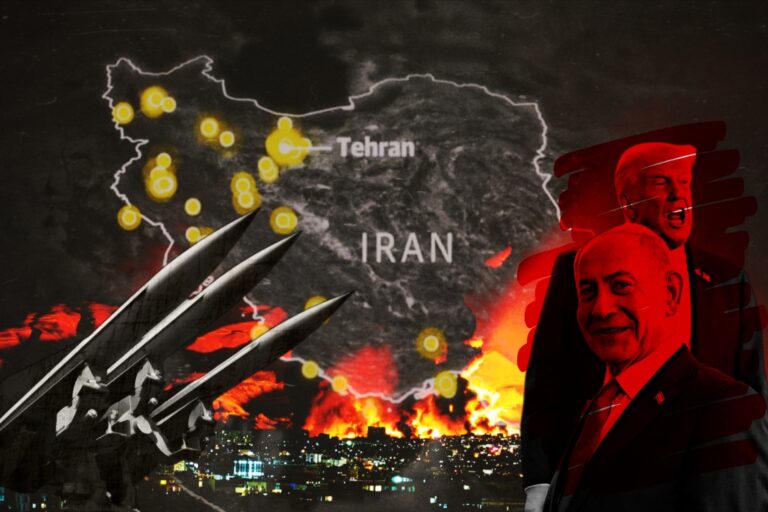
The ongoing war involving Iran demonstrates these dynamics with chilling clarity. According to available estimates, more than 2,076 people have been killed in Iran since late February 2026, with over 26,500 injured including 4,000 women and 1,621 children. On the first day of attacking Iran, the US-Israeli forces struck a girls’ elementary school in Minab, with missiles killing over 150-175 civilians, mostly school children.
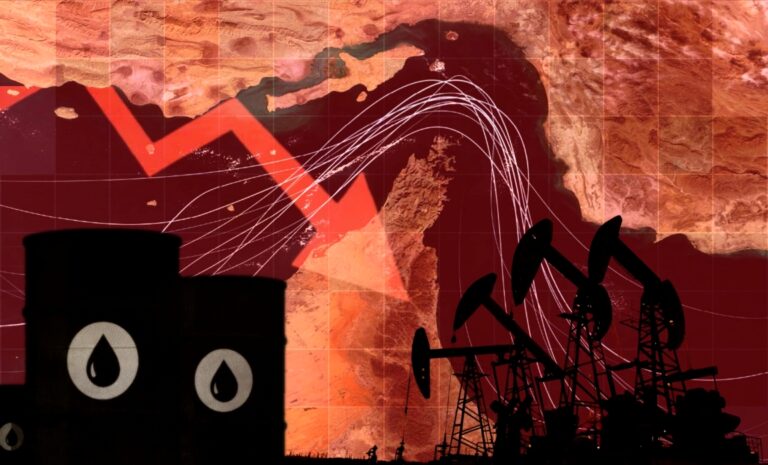
The economic toll is equally staggering having already exceeded $12.7 billion. The conflict has already triggered increases in global oil and gas prices, threatening up to 20 percent of the world’s oil supply. One of the defining features of contemporary warfare is its tendency to spill across borders, transforming localized conflicts into regional crises. The Iran war is no exception. Casualties have been reported in Lebanon, the United Arab Emirates, Saudi Arabia, and other Gulf states. In Lebanon alone, over 1,345 people have been killed, including at least 125 children. Even countries not directly engaged in combat have suffered fatalities due to missile strikes and collateral damage. Moreover, consequent on massive bombing by US imperialists on Iranian population, industries and social-infrastructure, lots of Iranian people have lost jobs and trying to survive in a badly affected economy. Also, reckless use of modern munitions many of which emit toxic discharges are also affecting global climate besides polluting the atmosphere. These are all acts of destroying human civilization and hence criminalities of the highest order.
Why the war?
For decades, bourgeois political theory attributed global conflict to ideological rivalry between capitalist and socialist blocs. Yet the persistence—and fallacy of this narrative. From Iraq to Libya, from Syria to Yemen, Ukraine and now Iran, military interventions have continued unabated, often in the absence of any systemic ideological opposition. All these wars have been generated by imperialist powers mainly US. The question thus arises: if bipolar ideological competition has receded, why do wars persist? The answer lies in the structural imperatives of imperialism itself. As lucidly explained by Comrade Shibdas Ghosh, Founder of the SUCI(C) and an outstanding Marxist-Leninist thinker of the era, way back in 1962: “…the imperialists themselves …are making desperate attempts to get out of the burning pyre. They are trying to offset the difficulties by having recourse to frantic rearmament and militarization of industry… True, it is much like a drowning man catching at a straw. Nevertheless, the imperialists are doing all this to stave off the crisis and maintain the boom of the capitalist market, at least temporarily, by artificial stimulation of increased military consumption. But far from easing the situation, militarism is aggravating the capitalist contradictions and crisis further still. And the more acute the crisis, the more militarized is becoming the economy. There is thus a vicious cycle going on, leading to an unbridled arms race…. Hard-pressed on all sides and rent with mounting crises, imperialism is turning more and more to militarized economy. And the more militarized the economy is becoming, the more rabid is imperialism prone to be in its adventurist acts. The capitalistically most developed country, namely the USA, has become a country of the most powerful, militarized economy. It is now the bastion of world reaction and international gendarme…. So, notwithstanding so many vital changes in the international situation since the second world war, the economic conditions which led Lenin to formulate the law of inevitability of wars between the capitalist countries in the epoch of imperialism still exist. The law, therefore, cannot be obsolete. And so long as the law of inevitability of wars will remain in force the danger of war will be there.” (SW Vol II)
So long imperialism will exist, there will be no respite from war. When workers refuse to be mobilized for imperial ambitions, when soldiers recognize their common class position across borders, and when oppressed peoples unite against both external domination and internal exploitation, the machinery of war begins to falter. But how can such conditions be brought about? In absence of mighty socialist camp which once was the bulwark against imperialist war machination, the imperialist sharks are running amuck. US President has already bragged that after Iran, he will turn guns against Cuba with a view to occupying that land. This war machination can be frustrated and the war-mongering blunted only if all peace-loving people round the world close their rank and develop a powerful well-coordinated anti-imperialist anti-war movement round the world along right direction and under correct leadership. That alone can be the deterrent to this recurring surge of imperialist-generated war entailing enormous loss of life and property.