Almost 25 years back, Sunil Kamble from Nildoh village of Hingna tahsil, Nagpur, industrial worker of a factory situated at MIDC Nagpur, while asked about nature of his and duty hours, replied: ‘we enter the factory at 8 o’clock in the morning, but do not know when we will be free from the duty. It may be 8 hours, 12 hours or even 16 hours’. That was the normal scenario of the then industrial belt in Maharashtra. Today, it is a common feature throughout India after globalization of capitalist economy. With the passage of time, permanent employment has virtually been abolished. Instead, workers are employed on contract basis at a very low wage to do the jobs of permanent nature. Their working condition is very poor, and their job is not secured either. These low paid contractual industrial workers are being grilled under the ruthless exploitative capitalist system.
Audacity of further increasing working hours
Of late, business tycoons like Narayan Murthy co-founder of IT giant Infosys, has advocated for 70 working hours a week meaning 12 hours a day. In a conversation with former Infosys CFO Mohandas Pai he said, ”India’s work productivity is one of the lowest in the world. So, therefore, my request is that our young stars must say, ‘This is my country’. I would like to work 70 hours a week”. (The New Indian Express 09-01-25) SN Subrahmanyan, another leading industrialist and Chairman of Larsen and Tubro, a leading Indian multinational, has gone a step ahead and preached for 90 working hours a week. He said he regretted not being able to make the workers work on Sundays and he would have been more happy if he could introduce 90 hour week and added that he himself has been working on Sundays. “What do you do sitting at home how long can you stare at your wife how long can the wives stare at husbands; get to the office and start working. He further said…. If you have to get to the top of the world, you have to work 90 hours a week”.
BJP government is operationalizing bourgeois class design
To fulfill the class interest of the ruling Indian bourgeoisie, the BJP government at the Centre has already changed the labour laws drastically and nullified the earlier prescript of working 8 hours a day. This revision of labour laws, it said, was in the interest of the workers. Incredible indeed! As we have mentioned above, permanent jobs have gradually withered away and ill-paid contractual jobs without any fixed working hours has become the order of the day. Now, Tata Consultancy Service (TCS), the largest Indian IT company, has decided to retrench 12,000 permanent employees i.e. 2% of their total employees while its profit is soaring. It reported a net profit of Rs 12,760 crore in quarter ending June 2025 which is higher than Rs 12,040 crore in the corresponding period last year. Therefore, an obvious question that arises is, while the corporate behemoths are minting super-profit by pocketing unpaid wage of the workers, they now, having increased their productive capacity far more with the help of newly developed technology like artificial intelligence, are shamelessly holding brief for increasing working hours on the one hand and drastically shredding manpower on the other hand. Not only TCS, all the global IT giants like IBM, Intel, Microsoft, Panasonic, Tesla, Sony, Cognizant, Google, Accenture are doing the same thing. If this trend persists, AI (Artificial intelligence) in the near future is going to cause havoc in the IT industries as well as in other industries. Lakhs of workers and employees are going to lose their jobs throughout the world. AI, it requires to be mentioned, is a boon from modern science. So, in a civilized world, such advanced technology would have relieved the workers of extra manual as well as intellectual labour and they could use these extra hours as leisure. But, in the worn out capitalist system, this endowment of modern science has become a bane to the millions of workers and employees round the world since the system only guarantees maximum profit for the capitalist oligarchs at the cost of life and livelihood of the labourers. What a hoax and height of injustice!
Marx’s prognosis of capitalism
Almost 150 years back, Karl Marx, the great leader of the world proletariat said: “It is the constant aim of capitalist production to produce the maximum surplus value or surplus product with the minimum of capital advanced; in so far as this result is not attained by overworking the labourer, it is a tendency of capital to seek to produce a given product with the least expenditure economizing labour power and costs”. (Theories of surplus value, Chapter 18) When Marx said it, the era was of free competition (laissez faire economy) and average profit. Capitalism still had some progressive role and did not reach the stage of monopoly and imperialism, thereby becoming utterly reactionary and a stumbling block before social development. Yet, Marx could understand the inherent law of capitalism which is based on ruthless exploitation of the labourers and hence called for overthrowing such an oppressive system. And now, at the stage of decadent moribund capitalism, oppression and repression of labour has ascended the peak. In the hands of the capitalist owners, science which has worked as handmaiden in the development of mankind and civilization, is being misused to retard the social progress and growing pauperization of the toiling millions which is posing danger to that very civilization.
History of 8 hour working day
It bears recall that the demand for eight hour working day was achieved through a bloody struggle of the workers who in the 1880s faced harsh conditions with long hours (10-16 hours a day). So, they organized a historic movement for implementation of an eight-hour workday from 1 May 1880 which gained momentum with every passing day. On 4 May 1886, a violent clash occurred between workers and police during a rally at the Haymarket in Chicago. Since then, as per decision of the Second International of the communist parties in 1889, the day of 1 May is being observed as historic ‘May day’ or ‘international workers’ day’. So, the stipulation of 8-hour working day is a hard-earned right of the workers. But now, the capitalist-imperialist rulers are curtailing that right flagrantly with a view to exploiting labour more cruelly.
Scenario in socialist USSR
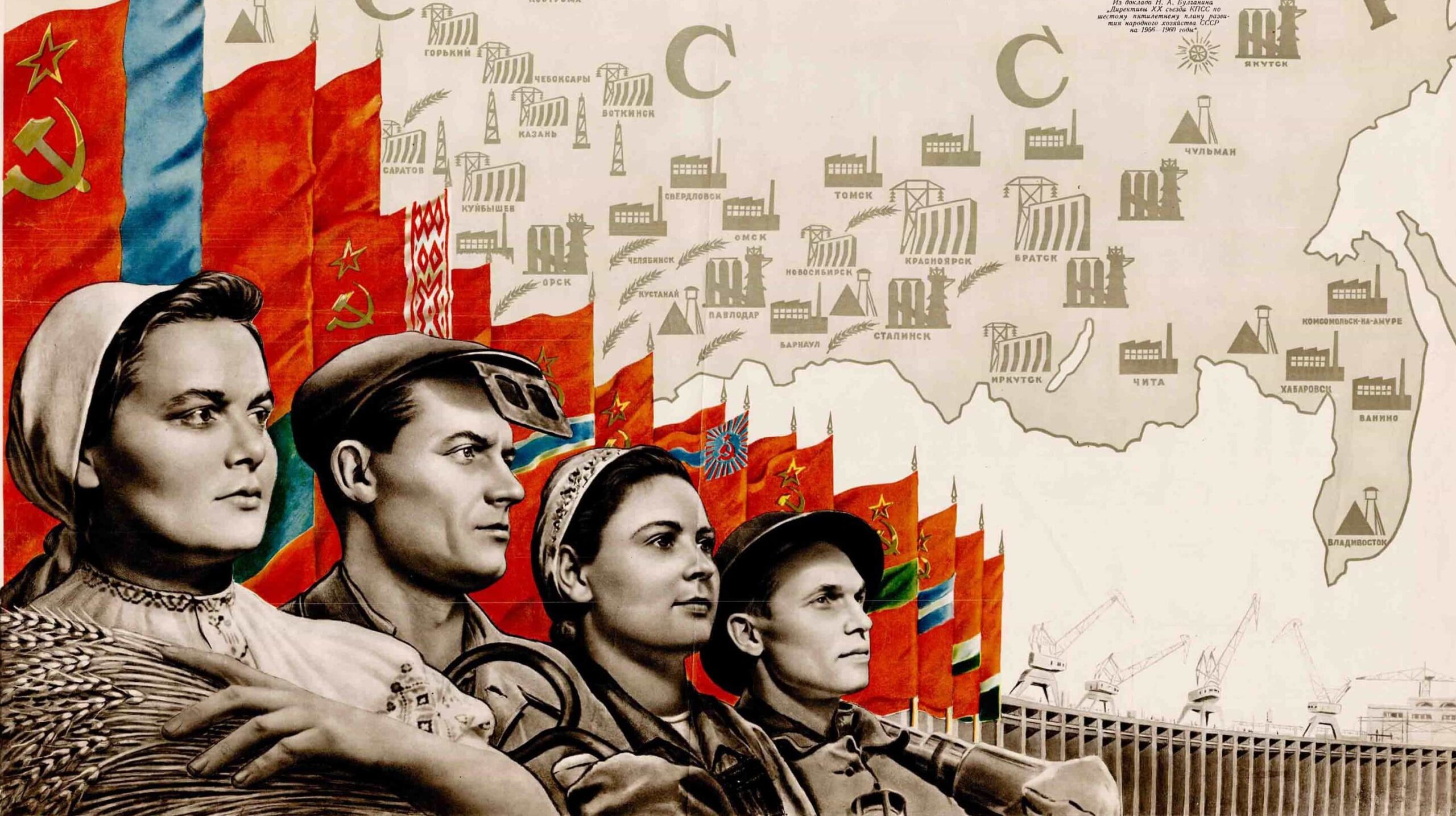
Marx deduced the inevitability of “transformation of capitalist society into socialist society wholly and exclusively from the economic law of motion of capitalist society” (referred to in V.I. Lenin CW). This means that under the governing law of capitalism, capitalist development becomes pregnant with the historical possibility of socialism springing from its womb. Inevitability is, therefore, to be understood as the inexorable drive towards the realization of what is rational and necessary in a process under given conditions. Proving Marx’s prognosis to be entirely true, the socialist Soviet Union was established in 1917 after the historic November Revolution under the leadership of the great Lenin. Following that, a working-class state where exploitation of man by man was abolished came into being. Before the revolution, industrial workers of Czarist Russia, as well as during the brief rule of the Russian bourgeoisie from February to November 1917, had to work 12–13 hours a day. In the textile industry, the burden was even harsher—15–16 hours under stringent working conditions. Wages were very low, often irregular, and death due to malnutrition was common among workers. After the socialist revolution, however, the condition of the workers changed radically. In the Soviet Union, it was decided that working hours should be 8 hours a day and 6 days a week. In 1926 the working hours were reduced to 7½ hours, and in 1929 further brought down to 7 hours a day and 5 days a week. Upholding the decision of the Bolshevik Party (CPSU-B) and the socialist Soviet state, great Stalin declared at the Party Plenum in 1929: “Take a measure like the introduction of 7 hours a day. There can be no doubt this is one of the most revolutionary measures carried out by our Party in the recent period.”
Soviet Union overtook USA in less than 20 years
Due to the planned socialist economy, industrialization in the USSR was taking place at a very rapid pace. The unique feature was that within a few years, the problem of unemployment in the USSR had withered away. While the entire capitalist world was suffering from the Great Depression and much of their installed capacity of production had become idle, the USSR was surging ahead at remarkable speed. Compared to the beginning of the First World War and up to the mid-1920s, industrial production in the USSR increased by 334% within just 15 years from 1917 to 1932. In stark contrast, during the same period, industrial production decreased in the USA by 84%, in the UK by 75%, and in Germany by 55%. The salary of workers in the USSR also increased fourfold within the span of five years (1928–1933). This achievement was made possible due to the sincerity, dedication, and creativity of the working class, whose productivity was greatly enhanced by the socialist ideology and spirit that inspired them.
Worker’s alienation from labour in class-divided society
It is relevant to mention that a class-divided society alienates the workers from their labour. Workers give their labour simply to eke out a living. The dignity of labour eludes them in an oppressive society, capitalism included. The essence of alienated labour lies in the fact that “the object which labour produces—labour’s product—confronts it as something alien, as a power independent of the producer. The product of labour is labour which has been embodied in an object, which has become material, it is the objectification of labour. Labour’s realization is its objectification.” (Karl Marx, Economic and Philosophical Manuscripts of 1844, p. 68) Consequently, labour becomes something external and coerced. As Marx put it: “The worker therefore only feels at home when he is not working, and when he is working he does not feel at home.” (ibid., p. 274)
Socialism removes alienation from labour
But such is not the case in socialism, which creates conditions where the worker feels at home, since his or her work becomes central to the task of socialist construction. The worker realizes that labour is no longer appropriated by an owner of the means of production but is instead creating material wealth for the benefit of the entire society, including himself or herself. This accomplishment is possible only through the creation of abundance in material production, which serves as the prior condition for freeing labour from alienation. At the same time, socialism makes possible a revolutionary transformation in the cultural outlook of society—especially in its view of labour—by removing the essential distinctions between physical and mental labour, between industry and agriculture, and between town and village.
Soviet socialism created wonders
It did happen to a great extent in USSR. It is pertinent to recall the Stakhanovite movement. The movement began in 1935, following Alexei Stakhanov’s record-breaking coal mining feat, where he mined 102 tons of coal in a single shift, exceeding his quota by 14 times. The movement was aimed to encourage workers to increase their productivity and output, using Stakhanov as a model of socialist emulation. This is also an example of how the workers imbibed the dignity of labour which was honoured in socialism. So, instead of being alienated from labour, they volunteered to happily work more, increase their efficiency and firm up socialist economy. So, even after the second world war in which the USSR was totally devastated and huge re-construction work was going on throughout the country, Great Stalin in his celebrated book ‘Economic problems of socialism in the USSR’ (1951) suggested, “it is necessary… to ensure such a cultural advancement of society as will secure for all members of society the all round development of their physical and mental abilities….. It would be wrong to think that such a substantial advance in the cultural standard of the members of society can be brought about without substantial changes in the present status of labour. For this, it is necessary, first of all, to shorten the working day at least to 6, and subsequently to 5 hours. This is needed in order that the members of the society might have the necessary free time to receive an all-round education”. By that great Stalin wanted to say was that without adopting the above mentioned steps socialist USSR cannot progress towards higher stage of socialism and then towards 1st stage of communism. So what 350 years of capitalism could not conceive of, only 30 years of socialism in the USSR could achieve. Hence, if the working class wants to be freed from the tentacles of capitalist oppression continuous increase in the working hours being a part of it, they need to develop as well as intensify class and mass struggles in right earnest under correct revolutionary leadership as conducive to anti-capitalist socialist revolution by which oppressive capitalist order can be overthrown and their emancipation from the yoke of merciless exploitation can be accomplished.