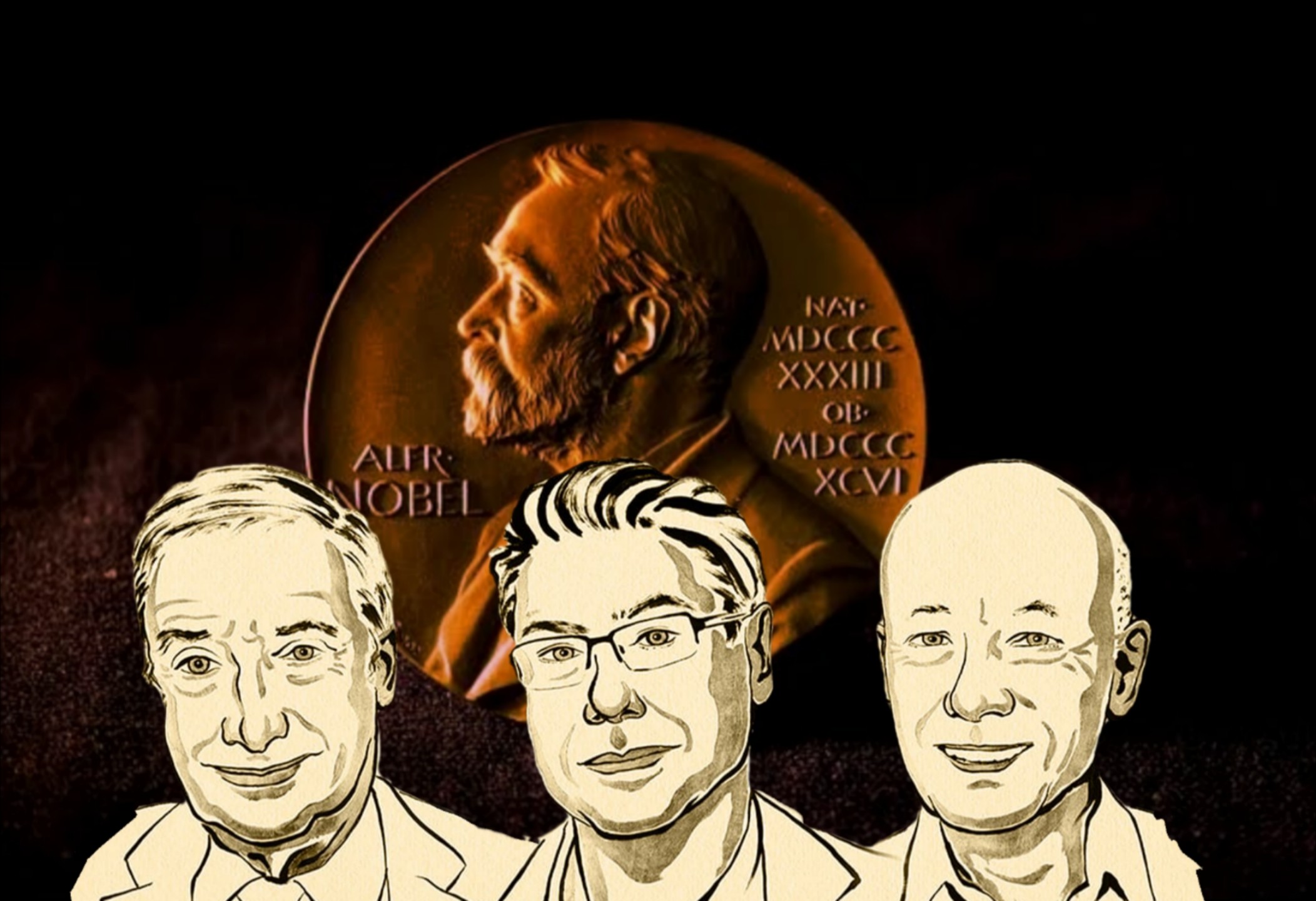
Every year, the Swedish Nobel Academy confers an award for a significant contribution in the area of Economics. Amartya Sen and Abhijit Vinayak Banerjee, two economists of Indian origin, also received the Nobel Prize. Amartya Sen was awarded the Prize in 1998 for his contributions to welfare economics, where the focus was on the well-being and actual capabilities of individuals, rather than just economic growth or income alone for measuring economic development. Sen argued that poverty should not be viewed merely as a lack of income, but as a “capability deprivation”—a lack of real freedoms and opportunities to live a life one has reason to value. Abhijit Banerjee’s Nobel Prizewinning proposition, developed with Esther Duflo and Michael Kremer, has been the use of an “experimental approach” to alleviate global poverty. This methodology breaks down the complex problem of poverty into smaller, more manageable, and precise questions that can be answered through field experiments. Joseph Stiglitz was awarded the Nobel Prize in Economic Sciences in 2001, along with George Akerlof and Michael Spence, for their “analyses of markets with asymmetric information”. His research focused on situations where one party in a transaction has more or better information than the other, such as when a customer knows more about their own risk level than an insurance company. Stiglitz is also recognized for his work on monopolistic competition and for his work on public policy and the economics of globalization.
Proposition of Nobel laureates of 2025
This year, the Nobel Prize in Economics has been awarded to Joel Mokyr, Philippe Aghion and Peter Howitt. Joel Mokyr is a professor at Northwestern University, USA, and Eitan Berglas School of Economics, Tel Aviv University, Israel. Philippe Aghion worked at Collège de France and INSEAD, and The London School of Economics and Political Science. Peter Howitt teaches in Brown University, Providence, RI, USA. They have received “for the theory of sustained growth through creative destruction and innovation-driven economic growth”. As per the view of present day economists, in course of the history of social development, living standards have not changed considerably from one generation to the next, despite many important discoveries during the last couple of centuries until the 18th century. They argue that though life had improved a bit from time to time, growth had stopped eventually in feudalism. However, this phenomenon underwent fundamental change after the Industrial Revolution, which occurred a little more than two hundred years ago. They further argue that over the last two centuries, for the first time in history, the world has seen ‘sustained’ economic growth. This has lifted vast numbers of people out of poverty and laid the foundation of prosperity of mankind. Assuming for argument’s sake that their observation is true, the question that would obviously arise is why has it been so? Is it that poverty has decreased? This year’s laureates in economics sought to provide an explanation to it. According to them, starting in Britain and then progressing to other countries, technological innovation and scientific progress resulted in a never-ending cycle of innovation and progress, rather than isolated events. This led to ‘sustained and remarkably stable’ growth. Its foundation is the constant flow of technological innovation. Continual economic growth occurs when new technologies replace old ones as part of the process known as ‘creative destruction’. According to them, economic growth depends on the level of technological progress, building on the physical and human capital accumulation. Using the proposition of useful knowledge creation in an environment of ‘creative destruction’, a mathematical model, these three laureates held that continuous innovation ‘sustained’ growth during the last two hundred years after the Industrial Revolution. They, however, did not specify whether the growth they have been referring to is of the people at large or of a few mega-rich.
But what is noted with a bit of surprise is that Joseph Schumpeter, an economist of 1940s who described capitalism as an evolutionary system posited that economic development is driven by entrepreneurs who introduce innovations, leading to “creative destruction” where new products and methods replace old technologies, firms and industries. But he assumed that market is free, competition open and state acts as an enabler of entrepreneurship of private operators—a proposition which automatically negates justifiability in the period where monopoly has grabbed the market by weeding out small capital.
Theories of macro and micro inventions of Nobel awardees
But the Nobel laureates this year have sought to reframe Schumpeter’s hypothesis but refrained from explaining why technologies historically had failed to produce ‘sustained growth. The Nobel prize winners distinguished between major breakthroughs (“macro inventions”) and incremental improvements (“micro inventions”). Macro inventions are radical technological discontinuities determined by some shift in people’s knowledge or understanding, or in a new combination of previously disparate ideas with potentially large effect on the marginal product of further improvements. Micro inventions, on the other hand, are incremental improvements to existing technologies explained by changes in economic supply and demand. That is, micro inventions are closer to everyday economic life and provide a key link between technology and the economy. Further, they also distinguished the useful knowledge for innovation in two parts – propositional knowledge and perspective knowledge. Macro intervention generate only propositional knowledge, whereas micro intervention creates perspective knowledge required for the regular useful goods and services. Until both the knowledges are integrated, the innovation cannot be sustained. The lack of a positive feedback loop between macro and micro inventions meant that even radical technological shifts always failed to result in anything but another technological plateau. While periods with rapid technological change could sometimes almost resemble the very early stages of the Industrial Revolution, or a takeoff, new innovations never accumulated enough feedback to produce sustained growth. What ultimately drove the takeoff into sustained economic growth was an expansion of “useful knowledge” (a term first introduced by Kuznets, another Noble Laureate (1971), powerful enough to breakout of the long-run stasis. The explanation no doubt sound technical or academic. But that has been reproduced to show the inherent fallacy.
Theory of ‘creative destruction’
First of all, they admit there is a ‘statis’, a euphemism for crisis marked by economic downslide, rising poverty, recession as well as other problems, anomalies and glitches. They hold that an environment of ‘creative destruction’ excels in the entrepreneurial skills of useful knowledge creation required for continuous innovation. This ‘Enlightenment’, after the Industrial Revolution, and its connections to practical use governed the societal changes needed to release the disruptive forces of ‘creative destruction’ into society. The resistance to technology, a phenomenon largely ignored by historians, had been pervasive in history and often came from vested interests. Involvement of assets like formal skills, tacit knowledge, reputation, specialized equipment, ownership of certain natural resources, or barriers to entry that secured monopoly positions, etc. by the vested interest were threatened by the new inventions. Specifically, the ‘Enlightenment’ paved the way for new institutions that were flexible enough to encourage competition between interest groups and allowed the winners to compensate the losers, for example, by functioning parliaments where representatives from different interest groups could meet and negotiate their claims.
So, they contend, if a country wants to grow, it needs to excel entrepreneurial culture that takes on challenges to implement propositional knowledge and pave the way to sustain innovation. A set of reforms that could increase the flexibility of entrepreneurship and competition among them is desirable. Notably, a stress has been given on ‘entrepreneurship’ i.e. the process of starting, organizing, and managing a new business or venture, which is attributable only to some individuals who have resources (capital) or have easy access to step into a new business.
Vain attempt to address issue of sustained economic ‘crisis’
What is evident is that first of all, the Nobel theories have not been verified based on the criteria of practice. Secondly, all the theories are aimed at validating capitalist theories and overrule Marxism, albeit without any substantiation. So, the Nobel awardees this year also carefully avoided reference to the dynamic relationship between the base (economic structure or production system) and superstructure of it (spheres of the non-economic institutions and ideologies, such as idea, thought, politics, law, religion, culture and so forth).
In the history of human civilization, capitalism was not only the sole form of economic base. After the initial stage of primitive clan-communism, human society has passed through the stages of slavesociety and feudalism and then reach capitalism through social revolutions that changed the production system and relations of production. The thoughts and ideas born in the superstructure by way of a dialectical interaction between human brain and the external world have a relative independence, and act upon the economic base. Thus, if the social need of progress is inhibited by the existing economic system and hence calls for concretization of social need in the form of a new production system which is qualitatively different from the existing one. through revolutionary change, this too gets reflected or is captured by social thinking. In this process, productive forces, which include human labour power the means of production (e.g. tools, equipment, buildings, materials, and improved land, and available knowledge and technologies based on science and scientific inventions which are constantly developing and hence are working as hand-maiden of ushering in the qualitative change in productive system. The feudal economic system was a decentralized, agricultural-based system where land was the primary source of wealth and power. At its core, it involved a hierarchy where a monarch granted land (fiefs) to nobles in exchange for loyalty, military service, and other support. Land was the principal source of wealth and power, with its ownership and use being central to the feudal system. Peasants, known as serfs, were tied to the land and could not move or change occupations without the lord’s permission, creating a dependent labour force. When this system outlived its utility, capitalism replaced that obsolete system as new a production system based on which the modern human society (bourgeois civilization) was firmed up. Is it not that in course of its development from Industrial Revolution based on Newtonian mechanics? Is it not that with new technological discoveries and advancement of science, many old tools and techniques have been adopted by discarding old technology? Has it been anything different in essence than what the Nobel laureates label as ‘creative destruction’?
Also, the bourgeois economists have been claiming that poverty has decreased. Nothing is more deceptive than this statement. In fact, in order to justify this downright falsehood, they cunningly change the basis of calculation the income and expenditure of the have-nots. For example, say, 30 years back, a daily income of Rs 32 per day per person was more or less adequate for subsistence level earning. So those earning more than that were not considered poor. Now if today, when inflation has risen sky-high and means of earning has been on a steady dwindle because of closure, retrenchment, so called downsizing of industries, IT -based technology is replacing manpower requirement, can the same basis be taken for deciding poverty level?
Capitalist mode of production
To be a bit more elaborative, in capitalism, means of production is in the hands of private owners (or capitalists) but the character of production is social i.e. unlike feudal economy, the goods produced are not for mere private consumption but for meeting the requirement of the people at large. But motive force of production is profit earning (for the capitalist owners of the means of production- industries or land). In its rising period, capitalism was operative based on laissez faire (i.e. free competition and reaping of average profit), the society has witnessed progress and people through employment in industries and related fields generated more income to buy items of necessity. So, economy prospered compared to previous land-based feudal economy. To put it succinctly, feudal economy based on the formula C-M-C (commodity-money-commodity) and where character of production was not social but of personal consumption. But in capitalism, the base changed to M-C-M’ (MoneyCommodity- Increased money in the form of profit), it marked an advancement in the social structure economy included. So, this new pattern of relatively ‘sustained’ economic growth for a given period had raised average GDP in the world very significantly and a marked improvement in living standards of people was evident.
Inherent fallacies of textbook capitalist theories
As could be noticed, all Nobel Laureates sought to find an answer of that within the framework of capitalism by way of prescribing various reforms. But not a single theory has gone into the roots i.e. capitalism which, following inexorable law of social development has lost its progressive role as soon as it reached the stage of monopoly and imperialism and now is in its death throes, still remains intact. The textbook economists or economic analysts take it for granted that capitalism has no alternative. We are not aware if the models prescribed by the Nobel Laureates have been given any trial and if so, what has been the result. But what we see is that notwithstanding propositions of Amartya Sen’s capability development, Stiglitz’s economics of globalization or Abhijit Banerjee’s experimental approach to poverty alleviation, things have not improved but plummeted from bad to worse. The concept of GDP (Gross Domestic Product), which is viewed as an indicator of ‘economic growth’ in capitalism does not conform to the reality nor does per capita income (a statistical average of wealth generated sans distribution pattern). Even after changing a few parameters of measurement, GDP figure is at wide variance with the obtaining economic spectacle. Why? Because of growing inequality—a mark of decadent moribund capitalist economy based on exploitation of man by man and concentration of wealth in the hands of a few superrich financial oligarchs and concomitant destitution of the toiling millions—is not reflected in either GDP or per capita income (which is statistical average of total wealth divided by total population and hence misleading since concentration of wealth in few hands and indigence of the rest millions would not be captured in that measurement) . As per latest official figures, the richest 10% of superrich receive over half of global income, while the poorest 50% receive only 8%. Moreover, 10% of the global population owning roughly 88% of the world’s wealth, and the wealthiest 1% holding a significant portion of that. The bottom half of the world’s population owns less than 1% of total wealth. What is more significant is that the richest 1% amassed huge wealth during economic crises and pandemics when common people were striving to eke out a bare living. This disproportionate wealth distribution, rapidly falling income of the common people particularly the downtrodden in absence of job opportunities and job loss and resultant squeezing of market (read demand in the market which is contingent upon the purchasing power of the people) has entangled capitalist economic operation in an unsolvable crisis. All maladies, aberrations, deprivations and progressive downslide of economy are stemming from that. Without addressing this basic question, any theory, analytical model, policy directive or claim of iconoclastic achievement in the sphere of economics would, in the ultimate analysis, prove to be a peddling in abortive pedantry.
Why is capitalist economy stuck in stagnancy
Fact is that capitalist economy is struck in stagnancy. Why? The Nobel laureates of this year attempted to answer these questions in their theory of ‘’creative destruction’ and that too by hands of entrepreneurs, who run the machine of exploitation under capitalism. But then their theory is estranged from the law of social development and the question of changing the production system based on the social necessity, as detailed above. Had they been serious to probe into the cause of the growing crises of economy the world over, they could not but notice that capitalism itself is the biggest obstacle to social progress and the capitalist economic system itself is coming in the way of abundant production and its equitable distribution. So, prosperity of people at large has vanished. Now prosperity is skewed in the hands of a few super rich, as stated earlier, while toiling millions are pauperized more and more with every passing day, so how can there be prosperity of common people. As admitted, albeit indirectly, by the Nobel Laureates themselves, increased living standard of common people and not GDP (where distribution of wealth is not captured) is the mark of real economic prosperity. Why is it so?
Genius of Great Marx provided the answer
Answer was provided by a genius like Karl Marx. The question which perplexed one to all is wherefrom profit of the capitalists comes? Great Marx showed that method of procuring the means of life necessary for human existence is called mode of production for material values (food, clothing, instruments of production etc.). The instruments of production and the people who use these instruments for producing material values jointly constitute the productive forces. An important aspect of the mode of production is the relations of men to each other in the process of production. That is called relations of production.
Then he proceeded towards exposition of Capitalist Economic Laws. He showed that a commodity has two values. One is ‘use-value’ and the other ‘exchange value’. ‘Exchange value’ is determined by the ‘labour-time’ spent on producing each commodity, article or product. The term ‘exchange value’ has been used, because this is the basis of the whole analysis. But in actual life things hardly ever sell at precisely their ‘exchange value’. In capitalism, whether it is material products or human labour power, both are bought and sold on the market at a price under the strength of demand and supply, which may be either above or below the correct ‘exchange value’. The ‘exchange value’ of a commodity is not identical to its price but represents rather what (quantity of) other commodities it will exchange for, if traded. Marx also clarified that in a commodity is embodied two aspects of the labour— abstract and concrete labour. ‘Abstract labour’ is the expenditure of human labour power in general; it creates the value of a commodity. ‘Concrete labour’ is labour expended in a definite form; it creates the ‘use-value’ of a commodity. There is only one factor common to all products—they are produced by human labour. A thing has greater exchange value if more human labour has been put into its production (necessary foods have far less exchange value than motor cars). ‘Exchange value’ is determined by the ‘labour-time’ spent on producing each commodity, article or product. The term ‘exchange value’ has been used, because this is the basis of the whole analysis. But in actual life things hardly ever sell at precisely their ‘exchange value’. In capitalism, whether it is material products or human labour power, both are bought and sold on the market at a price, which may be either above or below the correct ‘exchange value’. There may be a surplus of the particular product on the market, and the price that day may be far below the correct exchange value; or, if there is a shortage, the price may rise above the value. A steamship is more valuable than a rowing boat because more human labour has gone to the making of the steamship. The whole process of training the skilled worker, besides the higher standard of living which is essential for the maintenance of his skill, involves more labour-time and hence more ‘value’. Marx further added that “Labour-time will always remain, even when exchange value has disappeared, the creative essence of wealth and standard of the cost required to produce it.” (Theories of Surplus Value, CW, Vol. III) Marx also explained that the instrument or machine is also created by human labour (i.e., innovation) and hence it is nothing but “congealed labour”.
Then Marx brought his historical concept of ‘Surplus value’. The ‘Surplus value’, he proved, is equal to the new value created by workers in excess of their own labour-cost, which is exropriated by the capitalist as profit when products are sold. So, profit is ‘expropriation of surplus value’. Thus, ‘surplus value’ is the result of the worker’s unpaid labour. Essentially, a successful innovation from this surplus investment could be a result of workers, not the entrepreneur or capital owner.
False assumptions of bourgeois economics
Bourgeois economists argue that capital and labour are two conditions of production. Marx refuted by saying that Capital, first of all, is accumulation of money and could not make its appearance in history until the circulation of commodities has given rise to the money relation. As stated above, in the formula M – C – M´—the simplest expression of operation of capitalist economy— M’ represents the increased capital (original capital plus profit). So, capital is value which brings in ‘surplus value’ by exploiting wageworkers. So, was his remark that and “Capital is “dead labour, that vampire-like, only lives by sucking living labour, and lives the more, the more labour it sucks.” (The Capital, Vol. 1)
Marx had further stated that, “The monopoly of capital becomes a fetter upon the mode of production, which has sprung up and flourished along with, and under it. Centralization of the means of production and socialization of labour at last reach a point where they become incompatible with their capitalist integument. Thus integument is burst asunder. The knell of capitalist private property sounds. The expropriators are expropriated.” (ibid) He did not live to see the stage of full-grown monopoly and imperialism.
It was Great Lenin, his worthy disciple, who explained that in this stage of moribund decadent capitalism, the motive force of production is not just to earn profit but maximum profit. Maximum profit means maximum exploitation and deprivation. Lenin also explained how the imperialists-capitalists in their frantic attempt to stave off crisis of capitalist economy is tilting more and more towards militarization and generating war for grabbing markets.
Final Words
This is the truth of economic science which is irrefutable. Superiority of socialism where means of production is not owned by any group of individuals nor maximization of profit is the motive force of production, was factually proved by Soviet socialism till the time the process was not reversed by the counter-revolutionaries.So howsoever frantic may be the efforts of the bourgeois economics to explain the severe economic crisis of capitalism by advancing theories of distinction between major breakthroughs (“macro inventions”) and incremental improvements (“micro inventions”), “propositional knowledge of observation, cataloguing and classification of natural phenomena as well as the establishment of regularities and principles and natural laws governing these phenomena”, fact is that unless the very capitalist system is overthrown, exploitation of man by man is abolished, the motive force of production is changed from profit maximization by a handful of monopolists to maximum satisfaction of social necessity, remedial prescriptions would remain ever elusive.