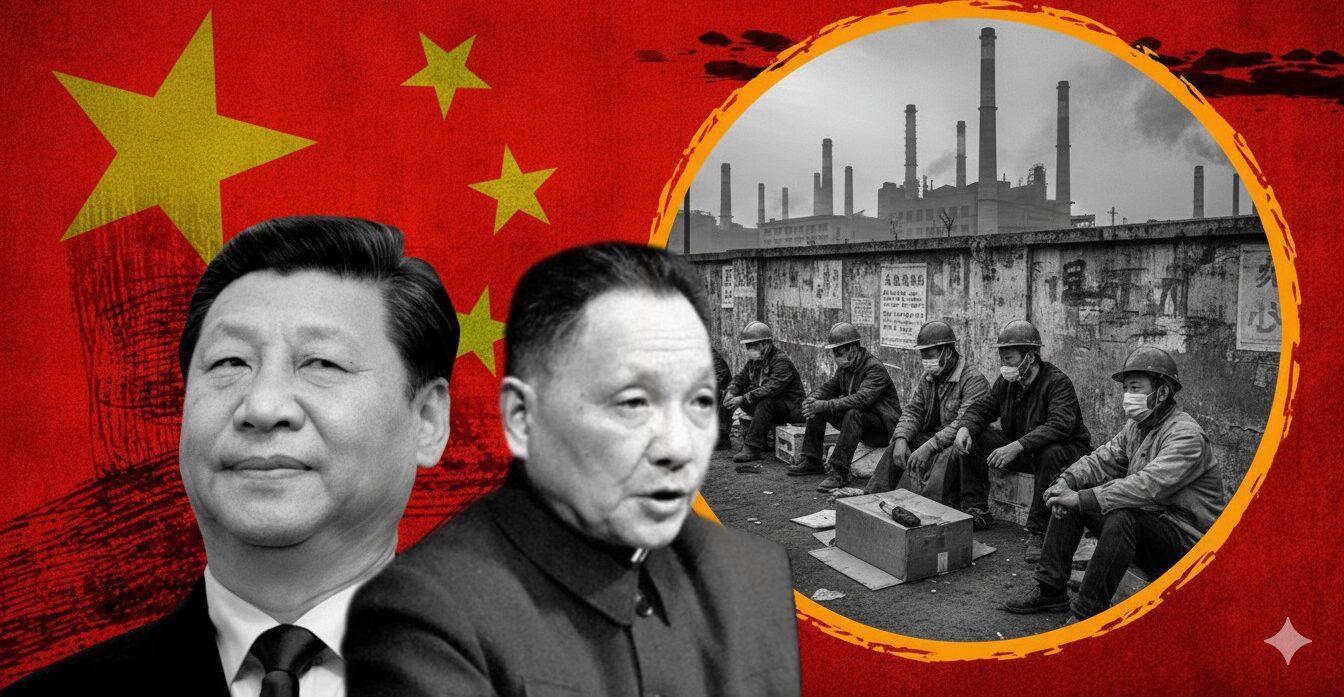
The intersection is quiet at 4 a.m., but not as quiet as one might expect. Fluorescent light radiates from all-night breakfast stalls. People, mostly men, loiter in small groups on the sidewalk, silently eating steamed buns. Everyone seems to be waiting. Around 4:30, the first rays of sun appear, and it becomes clear what everyone was waiting for.
Job recruiters ride up on electric scooters and, without getting off, start shouting out day rates —170 yuan! 180! (That’s about $25.) The early risers swarm around them to hear what’s on offer: gigs pouring concrete on construction sites, or packaging bottled drinks, or cleaning buildings. From cheap dormitories nearby, more workers, men and women, stream out. By the time the sun is up, this intersection in Majuqiao, a neighbourhood on the southern outskirts of Beijing, the Chinese capital, is full of hundreds of people.
This is Beijing’s largest day labour market today, where people from around the country gather every morning for a chance at a hard day’s work. The lucky ones are whisked off in minivans, some with their own hard hats or mops in tow. The unlucky ones keep waiting for the next recruiter, or they go home. By 8 a.m., the crowd has already thinned —people’s fates, at least for that day, decided. The slowdown shows up not only in fewer jobs, but also in the market’s thinning crowds and the makeshift places people call home. On telephone poles, fliers advertise shared rooms for as low as $3 a night. Still, under faded signs for cell phone repair shops and dumpling stalls, some people sleep on the streets.
The market’s soundtrack consists of bursts of negotiations with recruiters, over a lower hum of resignation. “Anyone want to be an actor?” called out a man on a scooter. He was looking for women, ages 16 to 50, to be extras on a film set.
A crowd pressed in around him, demanding to know how much it would pay (about $14), for how long (two to three hours) and whether they’d have to get to the set, about an hour away, on their own (yes). Most of the women walked away, grumbling that it wasn’t worth it. The recruiter shrugged and nosed his scooter to another spot in the crowd.
One of the women who walked away was Wang Liyuan. With her ponytail and energetic voice, Ms. Wang exuded a youthful air. But the problem was that at 43, she wasn’t youthful anymore, at least not by recruiters’ standards.
“At 40, you’re already retired,” she said, shaking her head. Ms. Wang started coming to the market after she was let go in 2022 from her job of making pills at a pharmaceutical factory because, she said, of her age. But that was the same reason she struggled to find a new job. After years at the factory, her feet hurt badly if she stood for long stretches. She had not graduated from middle school, while younger competitors all had high school degrees. Even construction sites have grown picky: “They choose people like they’re choosing concubines: Are you a good worker? Are you efficient?” said Ms. Wang, who is from the northeastern province of Heilongjiang. Despite being at the market almost daily, Ms Wang said she generally found work only four or five days a week. She earned $25 on the best days; the year before, jobs not only paid a few dollars more, but also included meals. She had stopped making pension and medical insurance payments, worried that the funds would run out of money by the time she was eligible. She had also cut down on the allowance she gave her 13-year-old son, who was in Heilongjiang with his grandparents.
“Originally, I wanted to give my son a bit of a better life,” Ms. Wang said. But that can’t be! What was it that she knew? Because education was free, medical treatment was free. It’s all business now.
Huo Shaxi has also been in the job market for the last four years. He previously worked for a publishing company. He likes to do gigs again. He said, “Although this work is not permanent, fifteen days’ work is available in a month, but I am free in this work. I can go home to take care of my family.” [The above details have been published in The New York Times dated 26-08-25, reproduced by The Telegraph on 27-08-25.]
Spectacle is yet more horrifying
But this is just a glimpse of the shrinking job market of China. According to National Bureau of Statistics of China, unemployment rate among youths is 21.3%. A record 11.79 million university graduates this year face unprecedented job scarcity amid widespread layoffs in white-collar sectors including finance, while Tesla, IBM and ByteDance have also cut jobs in recent months. Urban youth unemployment for the roughly 100 million Chinese aged 16- 24 spiked to 17.1% in July, a figure analysts say masks millions of rural unemployed.
China suspended releasing youth jobless data after it reached an all-time high of 21.3% in June 2023. Rising unemployment in China is pushing millions of college graduates into a tough bargain, with some forced to accept low-paying work or even subsist on their parents’ pensions, a plight that has created a new working class of “rotten-tail kids”. The phrase has become a social media buzzword. In China, the jobless rate has been exacerbated by a slowdown coupled with growing numbers of people pursuing higher education. Over and above that, like spokespersons of Indian monopolist sharks, Jack Ma, an industrial oligarch of China, advocated to work 12 hours a day, six days a week.
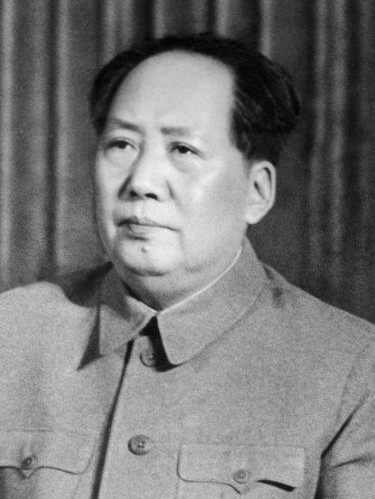
Is it a spectacle of a socialist economy or state? Certainly not. Those acquainted with the socialist China under great Mao Zedong know what tremendous progress it made in the job front, providing not only permanent gainful employment to all but also equipping the workers and peasants philosophically to imbibe true spirit of MarxismLeninism which espouses that labour is the creation of all wealth and even capital (which is accrued out of profit by appropriating unpaid labour). “We have eliminated piece-work wages and incentive bonuses. The salary scale has been reduced. …a factory is the property of all the people, so salaries …depend…on what the state leadership decides…We are eliminating unjustified disparities in salary…liberation in 1949 was a step toward heaven for workers…” said a textile worker of socialist China in 1958. (Source: “Daily Life in Revolutionary China” by Maria Macciochi)
China—backward journey from socialism to capitalism
The Chinese communists under great Mao Zedong fought to establish a socialist, egalitarian and free society, which was later subverted by capitalist-roaders insiders of the CPC. In the 1960s, Mao Zedong and his followers were virtually sidelined by the renegade Liu Shaoqi and Deng Xiaoping, when the duo usurped a majority in the party’s leadership. Liu Shaoqi and Deng Xiaoping wanted to establish capitalism in China under the one-party rule of the CPC by toppling socialist system. Mao Zedong could realize that and began to adopt preventive measures. One would recall that great Stalin during his penultimate days could understand that neglect of due ideological-philosophical-cultural struggle, the Soviet Communist Party (CPSU) was poised for an attack from within. So, in the report to the 19th Congress of CPSU, he said: “We must put an end to underrating the importance of ideological work, determinedly combat manifestations of a liberal attitude or indifference towards ideological errors and distortions, systematically improve and perfect the ideological and political training oí our cadres; we must utilize all our means of ideological influence, our propaganda, agitation and press, for the communist education of Soviet citizens.” Drawing necessary lesson from the debacle of Soviet socialism after Stalin’s demise and usurpation of power by the Khrushchevite revisionists, Comrade Mao sounded a note of caution that “In China, although in the main, socialist transformation has been completed with respect to the system of ownership…there are still remnants of the overthrown landlord and comprador classes, there is still a bourgeoisie, and the remoulding of the pettybourgeoisie has only started. The class struggle by no means is over. The class struggle …in the ideological field between the proletariat and the bourgeoisie will continue to be long and tortuous and at times will even become very acute. … the question of which will win out, socialism or capitalism is still not really settled.”(On the Correct Handling of Contradictions among the People; February 27, 1957) So, Comrade Mao in 1966 announced launch of the historic Cultural Revolution involving not only the party but the entire masses of people to nip in the bud the growing trend of modern revisionism posing serious threat to world revolution. The genuine communists and millions of progressive people round the globe who could sense this conspiratorial move and vile motive of the quarters of reaction including the revisionists-renegades masquerading as Marxists to dismantle socialism, heartily welcomed and applauded this epoch-making step. He advised in 1962: “Unless ..we fully implement the system of proletarian democracy …establish a socialist economy…We shall become a country like Yugoslavia, which has actually become a bourgeois country; the dictatorship of the proletariat will be transformed into a bourgeois dictatorship, into a reactionary fascist type of dictatorship. This is a question which demands the utmost vigilance.”(Peking Review, No. 27, July 7, 1978)
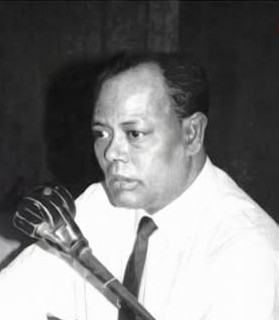
Comrade Shibdas Ghosh, Founder General Secretary of the SUCI(C) and an outstanding Marxist thinker of the era, said, “I hold that this Cultural Revolution has a sound scientific basis, judged by the yardstick of Marxism-Leninism, and the way the CPC is conducting this Cultural Revolution is really magnificent and full of great significance. Communists all over the world, who have really dedicated themselves to the revolutionary movement, have a great deal to learn from it.” After initial success of Cultural Revolution, Mao Zedong did not default in pointing out that “We have won a great victory. But the defeated class will continue to struggle. Its members are still about, and it still exists. Therefore, we cannot speak of the final victory, not for decades. We must not lose our vigilance.” (15 April 1969; Selected Readings). Fully endorsing the purpose and methodology of the Cultural Revolution, Comrade Ghosh did notice some certain shortcomings of it, like the inability to pinpoint the features of a new type of ‘economism’ and a new type of ‘individualism’ appearing in socialist societies “which are absolutely incompatible with the basic aim and object of socialism. Such a mentality breeds a typical individualistic and opportunistic trend among the workers.” (SW Vol. I) Also, “a good communist character ought to be characterized by complete identification of the self-interest with the interest of (socialist) society through unflagging dedication and constant vigil” (ibid) Comrade Ghosh also warned that “If the leadership cannot get over these weaknesses and shortcomings in conducting theoretical and ideological struggles… in absence of Mao Zedong and present leadership, revisionism may grow in the CPC and society in the very same way it grew in Soviet Union.’’ (ibid).
Counter-revolution in China was complete in early 2004
And exactly that has happened. After Mao’s death, Deng Xiaoping usurped power, reversed the gains of the Cultural Revolution, killed and jailed revolutionaries, cracked down on dissent and destroyed communes, collective farms, state-owned factories and political education centres. He ensured that discussion on Mao Zedong Thought and practising his ideology was banned in China. Deng ushered in capitalist transformation under the garb of ‘socialist market economy’ or ‘Chinese pattern of socialism’ and so forth. Market economy is a feature of capitalism. How can that be socialist? Similarly, socialism is a universal phenomenon based on scientific truth. How can that have special country-based pattern? These are all akin to the proverbial saying—A square peg in a round hole.
Since the late 1990s, as the monstrous capitalist system in China began to manifest the worst economic disparity, social tension and intensified class struggle between the capitalists, bureaucrats, leaders of the revisionist party and usurers on one hand, and the broad masses of workers, peasants and youth on another, the CPC revised its core policies and tried to preach some words on social harmony, ‘inclusive development’, etc., to dupe the people.
Our Party, guided by Marxism-Leninism-Shibdas Ghosh Thought, had long been observing the regression of China and finally, in March 2004, the Central Committee of our Party concluded that deviating from Marxism-Leninism Mao Zedong thought as well as from the path of socialism which ultimately led to degeneration of the CPC under leadership of modern revisionist Deng Xiaoping, “counter-revolution has already taken place in an apparently silent way in China and that the restoration of capitalism in China’s economy, state, politics and culture is complete and total”.
The features noticed were i) State protection of interests of the individual and private business, ii) guaranteeing right to individual and the right to profit, iii) recognizing private sector an essential part of the socialist economy, iv) rejection of basic condition of acceptance of Marxism-Leninism and Mao Zedong Thought, v) abjuring proletarian internationalism, stopping of supporting anti-imperialist, anti-neocolonial, militant working class movements in different parts of the world and vi) amending constitution to convert Chinese Communist Party into a party of the whole people.
Following these, China has been transformed into an imperialist country the features of which are vivid — both in domestic as well as international spheres. The employment scenario and condition of the working class bear eloquent testimony to that. Priceline in China, instead of going down (as expected in socialism like what was seen in Soviet Union under Stalin) is rising. The Chinese authorities are also reportedly cracking down on the peaceful protesters demanding greater rights for the working class and a real socialist system. On the other hand, China’s global stock of outbound foreign direct investment (OFDI), which includes investing in corporate mergers, acquisitions and start-ups, had grown from $744bn to as much as $2tn by 2020. In barely a decade, Chinese OFDI has gone from virtually nothing to more than $100bn year. The present Chinese President Xi Jinping has started stressing the need to find the ‘roots’ and ‘understand socialism with Chinese characteristics’, obviously to hoodwink the masses, albeit paying lip service to the ‘Marxist’ shell of the communist party. But the CPI, CPI (M) and the various factions of the CPI (ML) still hold China as a socialist country for reasons best known to them. Many parties with communist signboard around the world are also under the same confusion perhaps because Chinese party has been having a ‘communist’ tag.
Final Words
The spark in the pervading darkness is that the people of China have started realizing what they have lost by rallying behind Deng’s revisionist-reformist line. Despite all effort of the capitalist-roaders to erase Mao Zedong from people’s mind, he remains a revered national hero who liberated China and is still seen as an ideological leader by many.
The historical legacy of Mao Zedong Thought has started rearing its head. A report in the Global Times website indicates that a procession carrying a portrait of Mao Zedong in China, demonstrated respect or loyalty. Expressing total solidarity with China’s revolutionary working class and hundreds of thousands of real communists and true disciples of great Mao Zedong, we express firm hope that in no time they, being imbued with the revolutionary teachings of great Mao Zedong, will regroup themselves and give a resounding defeat to the counter-revolutionaries to re-establish socialism.