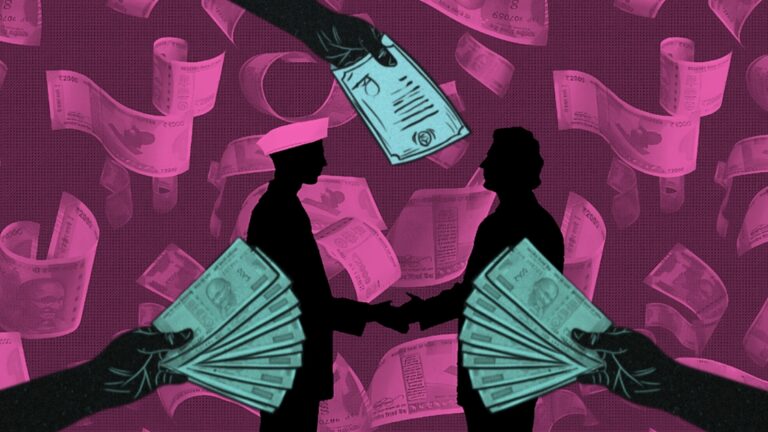
Capitalism is now in its death throes. The more its condition is worsening, the more reactionary, utterly corrupt and putrid it is becoming. And that rot is spreading all over, sparing none who is either abetting or serving decadent moribund capitalism– be it openly, camouflaged or veiled in secrecy, from bourgeois politicians to academia, some or other well-known personalities; — people moving in the upper or topmost echelons of society.
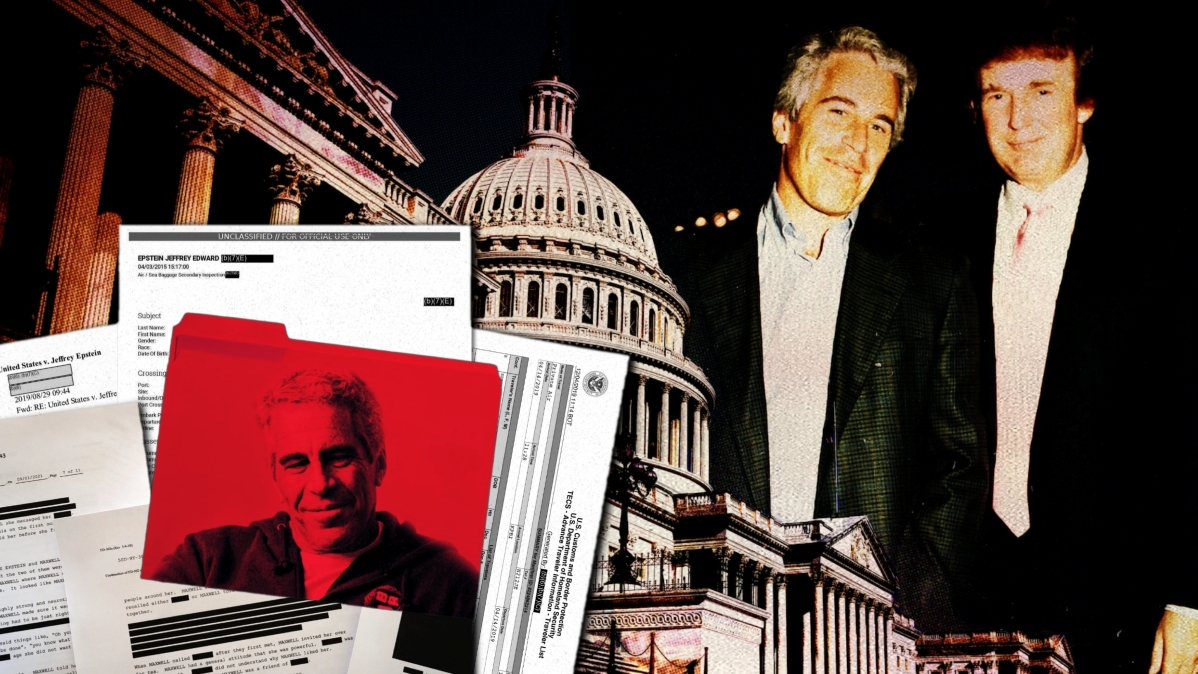
The latest revelations of the Epstein files are a glaring testimony how low the moral-cultural base of such persons has sunk. The unsealing of millions of pages of Epstein files is not merely a criminal archive, it is a socio-political-economic-cultural x-ray of the decrepit capitalist society. Whether what has come out so far in the report represents the entirety of the archive remains uncertain. What is clear, however, is that the files illuminate something far larger than one individual’s crimes. Epstein was not an isolated monster who slipped through ever widening cracks, the yawning gaps in this rotting capitalist order. His rise was made possible by this putrid socio-political-economic system which is granting immunity to injustice, crime, debauchery, autocracy and embodiments of dehumanization. This is not rhetoric. It is a diagnosis of a systemic disease that is eating into the very vitals of life in capitalism.
Who was Epstein
Epstein taught Mathematics and Physics in the city at the private Dalton School in New York, in the mid-1970s although he never graduated. A father of one of his students is stated to have been so impressed that he put Epstein in touch with a senior partner at the Wall Street investment bank Bear Stearns. In no time Epstein became a partner of the firm. According to The New York Times, on multiple occasions Bear Stearns questioned Epstein’s actions, including lying about his education in his résumé and charging expensive jewelry purchased for a girlfriend to the company. Still, in 1980, Epstein’s profile was riding high. An internal investigation held Epstein’s actions as violative of the Securities and Exchange Commission regulations. He was suspended and fined but denied wrongdoing, saying he was “deeply offended” by the investigation, and ultimately quit the firm. Clearly, his “connection” at the top came to his rescue.
Epstein’s fortunes swelled so much that by 1982, he had created his own firm – J Epstein and Co. Epstein became a multimillionaire very soon. He developed a social circle that included extremely wealthy individuals, prominent politicians, and even royalty. Even as he was climbing the ladder at Bear Stearns, he already mingled with some of the wealthiest movers and shakers of not just New York or US, but of the world. Throughout the 1980s, Epstein’s charisma continued to charm the elite, wealthy as well as powerful circles of not only US but of the entire world. In the 1990s Epstein began running his business from the island of St. Thomas in the Virgin Islands of US—a tax haven. He later purchased another island in the same vicinity, Great St. James. He also owned several private jets.
He was making fortunes from stock speculation by leveraging close ties with the two most powerful US presidents, Bill Clinton and Donald Trump. It is alleged that apart from helping his connections with tips of financial gains, with or without compliance with regulatory mechanism, he was also instrumental in satiating perverse proclivities. The 2005 police report in Palm Beach marked the beginning of formal scrutiny into the allegations against him about trafficking and promoting sex trade. Investigators uncovered a pattern: underage girls were recruited to provide “massages” to Epstein’s clients against cash payment (to keep the names of the clients secret) and incentivized to recruit others. It was exploitation structured like a pyramid scheme.
Probe into Epstein’s Activities
By 2007, US federal prosecutors possessed substantial evidence. Yet instead of a sweeping indictment, Epstein secured a non-prosecution agreement (NPA) under then–US Attorney Alexander Acosta. He pleaded guilty to state charges of solicitation and served 13 months in a county facility with extensive work release privileges. Following that, federal charges were abandoned and no one was informed of the terms of granting such an amnesty. Legally, this was a scandal. Courts later ruled that the rights of the surviving trafficked girls had been violated. Politically, it was revealing. The NPA demonstrated how prosecutorial discretion, combined with twisted legal representation, can transform criminal law into a negotiable instrument. In 2018 an investigative reporter identified some 80 alleged survivors (mostly minor teen-aged girls) of sexual abuse by Epstein or his associates. The report led to renewed examinations of sex-crime allegations against Epstein, and in 2019 a new federal criminal case was brought against him. He was arrested in July on charges of sex trafficking.
But before his trial could commence, he was found dead in a Manhattan jail cell on the morning of 10August 2019 under mysterious circumstances. Whether it was a suicide or murder still remains opaque.
Release of Epstein Files
Reportedly, attempts were made from quarters of vested interest to stall the release and tamper with the documents with a view to removing the “prominent” names. Finally, after a lot of dillydallying, particularly when throughout 2025, calls from survivors of Epstein’s abuse, estimated to number more than 1,000 girls and young women, were pouring in, the files were released.
The “Epstein Files” consist of investigative records accumulated over years: testimony, communications, photographs, financial documents. Their partial release followed intense public pressure and legislative action. But disclosure itself has become political terrain. Redactions protect certain names. Survivors have raised concerns about privacy breaches. Questions persist about whether all materials have been released. Transparency, in other words, remains mediated by institutional calculation. It was argued that mere association with Epstein does not equal guilt, and not every individual mentioned in the documents is accused of criminal conduct. Yet the density of ‘top level’ interconnection is sociologically significant. Former bourgeois political leaders, royalty, business magnates, academics—all appear within a social orbit that normalized association with a convicted sex offender. And circumstantial evidence does imply a raw fact that the trafficked girls were used to “entertain” high ups associated with Epstein. The list includes big names like President Trump, Elon Musk and others from USA, as well as many prominent politicians and public figures from different countries across the globe. The latest release of documents of Jeffrey Epstein also contain evidence that may set off political infernos around the globe for featuring the names of world leaders. Ghislaine Noelle Marion Maxwell, a British former socialite and accomplice of Jeffrey Epstein, was convicted of child sex trafficking and sentenced to 20 years in prison.
Thus, with this latest disclosure of documents and emails linked to the cases against Epstein, yet more has been revealed about the financier’s criminal sexual abuse of young girls and his interactions with wealthy and powerful figures not only from USA but from the United Kingdom, Australia, Norway, Slovakia and India.
Sexual Exploitation Long Predates Capitalism
Sexual exploitation long predates capitalism. It has certainly not abated in capitalism – a system that is based on exploitation and profit motive, but there were certain strictures in public life earlier. In the late 1963, John Profumo (a British politician and philanthropist was alleged to be the central character in one of the UK’s most spectacular sex scandals of the 20th century. Stories circulated that he had had an affair with a prostitute, Christine Keeler, a teenaged showgirl, who had also shared her favours with Yevgeny Ivanov, then the Khrushchev-led Soviet military attaché in London. His lie to Parliament, together with the obvious security dangers of the Ivanov association, forced his resignation in June from both the cabinet and Parliament and contributed to the fall of the then British government in that October. Later, much commotion was created when Monica Lewinsky, a former White House intern, had claimed that Bill Clinton, during his tenure as US President, had abused his power to establish a sexual relationship with her several times.
The accusation led to impeachment proceedings against Bill Clinton who initially denied it. But later he was forced to admit that he did have an “inappropriate relationship” with her. Allegations of extra-marital affair of John Kennedy, former US President with Hollywood Actress Marilyn Monroe also created some commotion in the 1960s.
But now with unfolding of Epstein file, what comes most glaringly to the fore is how moribund capitalism’s fusion of wealth concentration, global mobility, offshore finance and political capture magnify the scale and shields perpetrators of sex crimes Thus, sex abuse and sex crime has been globalized, in a way, and institutionalized with fine-tuning of a powerful nexus having its tentacles spread round the globe. Private jets and islands are not incidental details; they are infrastructures of impunity to both crimes and the criminals.
Indian Connection
Documents released reveal conversations between Anil Ambani, the billionaire chairman of Reliance Group, known to be close to PM Modi and Epstein. All the conversations took place in the years following Epstein’s first conviction for sex offences in 2008.The two emailed each other about a range of issues, from sizing up incoming US ambassadors to India to setting up meetings for PM Modi with top US officials. One would recall that in September 2016 when the Indian and French governments signed an intergovernmental agreement, known as the “Rafale deal” involving Rs. 59,000 crore or 7.8 billion Euros, highly indebted Anil Ambani’s Reliance Aerostructure which has no past experience and expertise of manufacturing aerospace and defence equipment nor even any factory in place to do so, Dassault, the Rafael jet manufacturing French company, selected such a heavily debt-burdened non-experienced Indian firm bypassing public sector giant like Hindustan Aeronautics for such a maiden joint venture in defence.
Another major Indian name featured in the Epstein files is Hardeep Singh Puri, who retired from the Indian Foreign Service to join BJP in 2014 and then a minster before winning any Lok Sabha or Rajya Sabha seat. Emails were exchanged between Puri and Epstein from June 2014. In December 2014, Puri wrote to Epstein again by email: “Please let me know when you are back from your exotic island,” he wrote, asking to set up a meeting in which Puri could give Epstein some books to “excite an interest in India”. Documents released also show Puri met Epstein at his Manhattan townhouse on at least three occasions: 4 February 2015, 6 January 2016 and 19 May 2017. In self-defence, Puri told Indian media that his visits and interactions with Epstein were strictly business-related.
Concluding Words
The Epstein files are not about scandal alone. It is about the permeability between wealth, political authority and degraded bourgeois culture epitomized in political figureheads of different countries, India included. Epstein’s social circle was transnational. Financial globalization has produced what might be called an informal global club of oligarchs—individuals who share conference stages, philanthropic boards, and investment vehicles. These networks transcend national boundaries and often outpace regulatory frameworks. It is has also exposed that sex-rackets and underage girl trafficking have become a roaring trade.
The ruling capitalist class and their political managers promise efficiency and prosperity. Yet when wealth concentration reaches oligarchic proportions, it corrodes even minimum legal accountability, safeguards crime and moral degradation. Commodification expands until even human vulnerability becomes exploitable capital. Epstein is dead. Maxwell is imprisoned. But the structures that enabled them—gross financial opacity, elite solidarity, and prosecutorial discretion shaped by class power—remain intact. If the files are to mean anything beyond spectacle, they must catalyze structural change i.e. revolutionary overthrow of obsolete, putrid capitalism after fulfilling necessary conditions enumerated by Great Marx and Lenin. Without it, the archive of crimes will stand not as a reckoning but as documentation of a system that knew, negotiated, and continued.